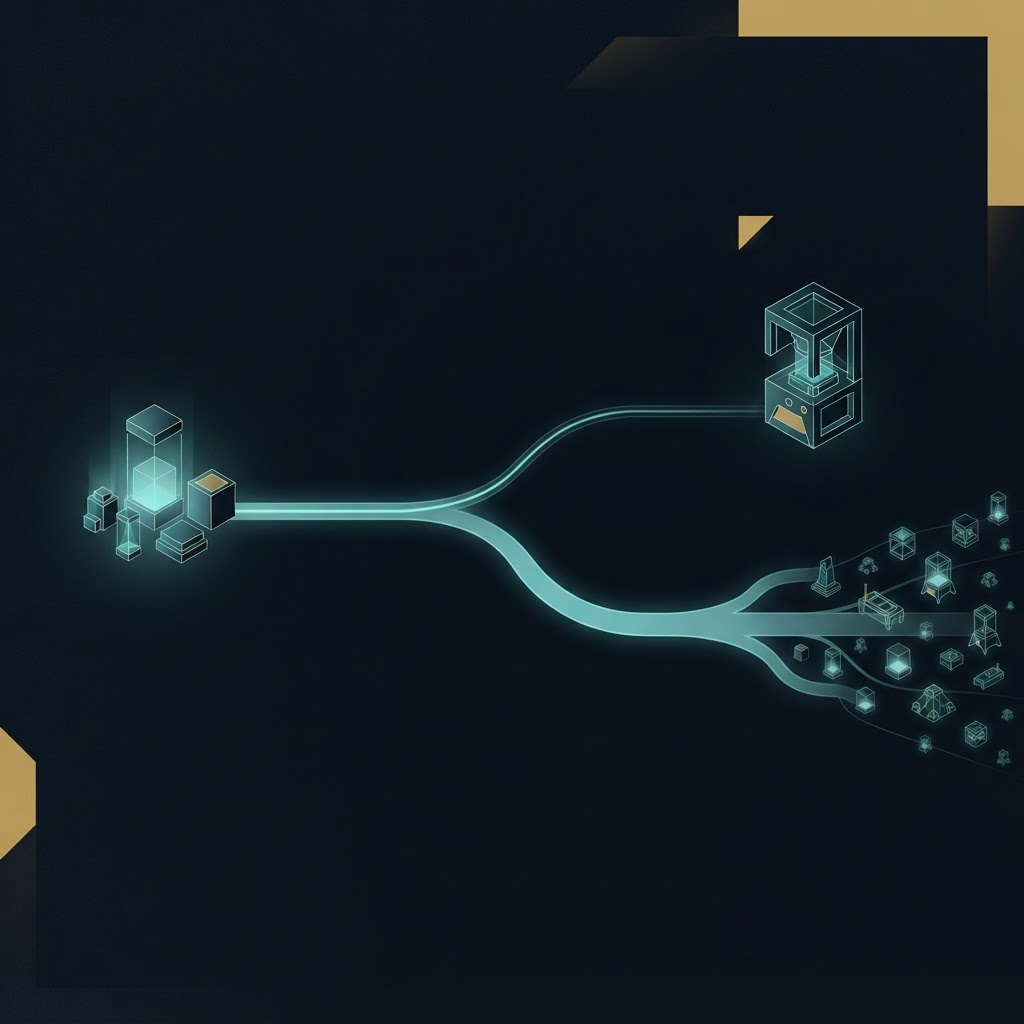
EIC Accelerator grant only looks like the cleanest deal in European deep tech: up to EUR 2.5 million of non-dilutive money, no investor on your cap table, no board seat for Brussels. For some companies it is exactly the right box to tick. For most, it is a quiet way to lower your odds and close a door you will want open in two years.
The difference comes down to one question the application forces you to answer in writing: who pays for deployment once the grant has paid for development?
This guide is the decision, not the brochure. If you want the full map of EU instruments first, start with our guide to EU funding for deep tech startups, then come back here when you reach the funding-type field of the full proposal.
What grant only actually means
The money and the rules
According to the official EIC Accelerator page, the grant component is a lump sum below EUR 2.5 million for innovation activities at TRL 6 to 8, to be completed within 24 months. Grant only is described as being for start-ups and SMEs with the capacity to scale up, and it can be received only once during Horizon Europe (2021 to 2027).
The EIC Accelerator guide for applicants (WP26) adds the fine print that matters:
- The grant covers a maximum of 70 percent of total eligible costs for TRL 6 to 8 work. You fund the rest.
- You must provide evidence that you have sufficient financial means, for example revenue, existing investors or shareholders, to finance the deployment and scaling of your innovation.
- Small mid-caps are not eligible for grant only.
- UK companies are only eligible for grant only.
Grant only, blended finance, investment only
There are three funding types, and you pick one:
- Grant only. The lump sum for development work up to TRL 8. Nothing beyond it.
- Blended finance. The same grant plus an investment component of EUR 1 million to EUR 10 million, usually direct equity or quasi-equity such as convertible loans. The EIC takes at most 25 percent of the voting shares and invests on a patient capital horizon of roughly 7 to 10 years.
- Investment only. Equity without a grant, for companies scaling fast and for small mid-caps.
One structural rule catches people out in blended proposals: a single work package cannot be funded by a mix of grant and investment. You split the plan cleanly between what the grant pays for and what the equity pays for. The equity side has its own mechanics, which we cover in the EIC Accelerator investment component guide.
The condition most applicants underestimate
The official line is reassuring. The EIC Accelerator FAQ states that all applications are evaluated on an equal basis against the criteria for the type of funding requested, and that there are no pre-set allocations of funding to the different forms of support.
Then comes the sentence that decides most grant-only bids. If you apply for grant only, you must demonstrate that you have access to the resources needed to commercialise and scale up your innovation, because the EIC Fund will not be there to invest or to help attract other investors.
Read that as an evaluator would. With blended finance, the EIC itself is part of your answer to "how does this reach the market?" With grant only, that answer has to sit entirely outside the EIC, and you have to prove it on paper. A founder with a strong prototype and no committed follow-on capital is in the weakest possible position for grant only.
Timing matters too. At the short proposal stage your amounts are indicative and non-binding. You fix the funding type at the full proposal, together with the lump-sum budget table and a financial plan. That gives you the window between Step 1 and Step 2 to make the call properly, not by default.
UK applicants feel this most, because grant only is their only route. As one consultant told Science|Business, the award is still "a lucrative badge of honour for follow-on investment", but the same piece notes that grant-only applicants have to convince assessors they have the follow-on investment needed to take the innovation further to market.
What the award data says
No official dataset breaks down 2026 results by funding type, so treat the numbers below as history, not prediction. The history is still worth knowing.
For the June 2022 cut-off, Segler Consulting's analysis reported 986 full applications: 638 blended (65 percent), 158 grant only (16 percent) and 190 grant first (19 percent). Success rates were 6.7 percent for blended, 5.1 percent for grant only and 12.6 percent for grant first. Of the 8 grant-only winners, 7 were from the UK, which had no other option.
The European Association of Innovation Consultants found a similar pattern in 2023. Its position paper on the Accelerator reports that blended and equity-only cases took 84 percent of the funding awarded that year, and that only 10 percent of awarded candidates, 17 companies, received grant only. Its members described a perceived preference for equity-bearing applications, and the association asked the EIC to stop evaluators disadvantaging grant-only cases.
Two honest caveats. First, the Commission's own position is equal treatment with no pre-set split, and the EAIC describes a perception, not a rule. Second, the overall bar is high whatever you choose: an evaluator who has reviewed thousands of proposals puts the success rate at around 6 percent of full applications. We break those numbers down in the EIC Accelerator success rate guide.
What the data does say clearly: grant only has not historically been the easier path for companies that had a choice.
Grant first is gone, which changes the maths
Older guides still describe a fourth option, grant first, where you took the grant and kept the door open for equity later. That option no longer exists as a separate box. From 2024, the EIC folded grant first into blended finance, and the Commission told applicants that if they require investment support, even if not immediately, they should apply for blended finance and then agree the timing of the investment with the EIC after selection.
This is the most important change for anyone weighing grant only. Many founders who picked grant only did so because they did not want to raise equity yet. Blended finance now covers that case: you can ask for the investment and negotiate when it lands.
The same article shows why the timing flexibility was needed. By then only 14 of 162 grant-first recipients had been proposed for investment support. One biotech CEO explained why the two-step route suited his company: "The company has been successful so far by not asking for more money than we need, including from private investors."
The official page also spells out the practical difference after selection. With grant only, you sign the grant agreement and receive the first pre-financing payment. With blended finance, you start due diligence on the investment component and can use its flexibility to negotiate a raise of up to EUR 2 million.
What if you choose grant only and later need equity? The WP26 guide allows ongoing grant-only projects, exceptionally, to submit a new proposal for blended finance or investment only. That is a fresh application through the same competitive process, not a switch you can flip.
When grant only is the right call
Grant only is not a mistake. It is a specialised tool. It fits four profiles well.
UK companies
The official page still lists UK applicants as eligible for grant only. The general eligibility FAQ adds that UK companies awarded grant only are not eligible for follow-up EIC equity, and that they receive Business Acceleration Services except those relating to access to investors.
Watch this space. The Accelerator FAQ now describes transitional arrangements under which, for budget year 2026 onwards, UK entities are treated as associated for the purposes of the EIC Fund, with any investment decision conditional on the UK association agreement being amended to include it. Until that happens, plan a UK bid as grant only and line up your deployment capital privately.
Non-EU holding structures
Many US investors want a US parent company. Segler Consulting warns that a European Investment Bank representative is usually present at blended finance interviews, and that a holding company outside the EU may stop the EIC Fund from investing. Its advice: think twice about blended, and if you still want the Accelerator, apply for grant only.
Companies already funded for deployment
If you have revenue, a committed lead investor or shareholders ready to fund the rollout, grant only fits the EIC's own condition squarely. You are not asking Brussels to share the deployment risk, only to accelerate the development work that comes before it.
Founders protecting control
Some founders will not give up a board seat or a stake to a public investor, full stop. That is a legitimate choice. Just price it honestly: you are trading away up to EUR 10 million of patient capital, and you still have to prove the money for scaling exists elsewhere.
When blended finance is the better ask
For most deep-tech hardware companies, blended finance is the stronger application and the stronger plan.
The reason is simple. Grants are excellent at funding evidence: prototypes, demonstrations, certification, the work between TRL 6 and TRL 8. They are poor at funding deployment, which means installing units in the field, hiring operators and carrying inventory. That is a capital problem, and the 24 month grant clock does not pause while you raise.
We see this from the operator side. EX EPIC has a EUR 160M+ capital track record across its ventures, and its waste-to-energy company Zero-X has put 200+ units into the field across 11 countries. None of that rollout was paid for by research grants. Public money de-risked the science; private and patient capital paid for the hardware in the ground. A venture that plans only the first half of that equation ends its grant with a validated prototype and an empty bank account.
Blended finance lets the EIC be part of the second half, on a 7 to 10 year horizon most private investors will not match. If you are also stacking other non-dilutive sources, our guide to equity-free funding for deep tech startups shows how they combine without crowding each other out.
A five-question test before you tick the box
Answer these before you submit the full proposal:
- Are you a UK company or held by a non-EU parent? If yes, grant only is likely your realistic route. Plan around it.
- Can you document the money for deployment today? Revenue, a signed lead, committed shareholders. If not, grant only asks you to prove something you cannot yet show.
- Will you need equity within the next three years? If yes, apply for blended finance and negotiate the timing. Grant first no longer exists to keep that door open for you.
- Is this the best use of your one grant? Grant only can be received once during Horizon Europe. Do not spend it on a milestone a smaller national grant could fund.
- Can you fund the 30 percent? The grant covers at most 70 percent of eligible costs, whichever route you choose.
Check the basics in our EIC Accelerator eligibility guide first. The last full-proposal cut-off of 2026 is 4 November. Short proposals can be submitted at any time, so if this test leaves you unsure, there is no prize for rushing: make the funding-type call properly for a 2027 cut-off instead.
FAQ
Can I switch from grant only to blended finance after I am selected?
Not by switching boxes. The funding type is fixed in the full proposal. Ongoing grant-only projects may, exceptionally, submit a new proposal for blended finance or investment only, which goes through evaluation again.
Does the EIC take any equity if I choose grant only?
No. Grant only has no investment component. You receive a lump-sum grant for innovation activities and the EIC Fund takes no shares.
Can a small mid-cap apply for grant only?
No. Small mid-caps of up to 499 employees can apply for investment only, or for blended finance in exceptional cases for rapid scale up, but not for grant only.
Do I need a private investor to apply for grant only?
Not specifically an investor. You need evidence of sufficient financial means to deploy and scale the innovation, which can be revenue, existing investors or shareholders.