Signal from the frontier.
 Insights
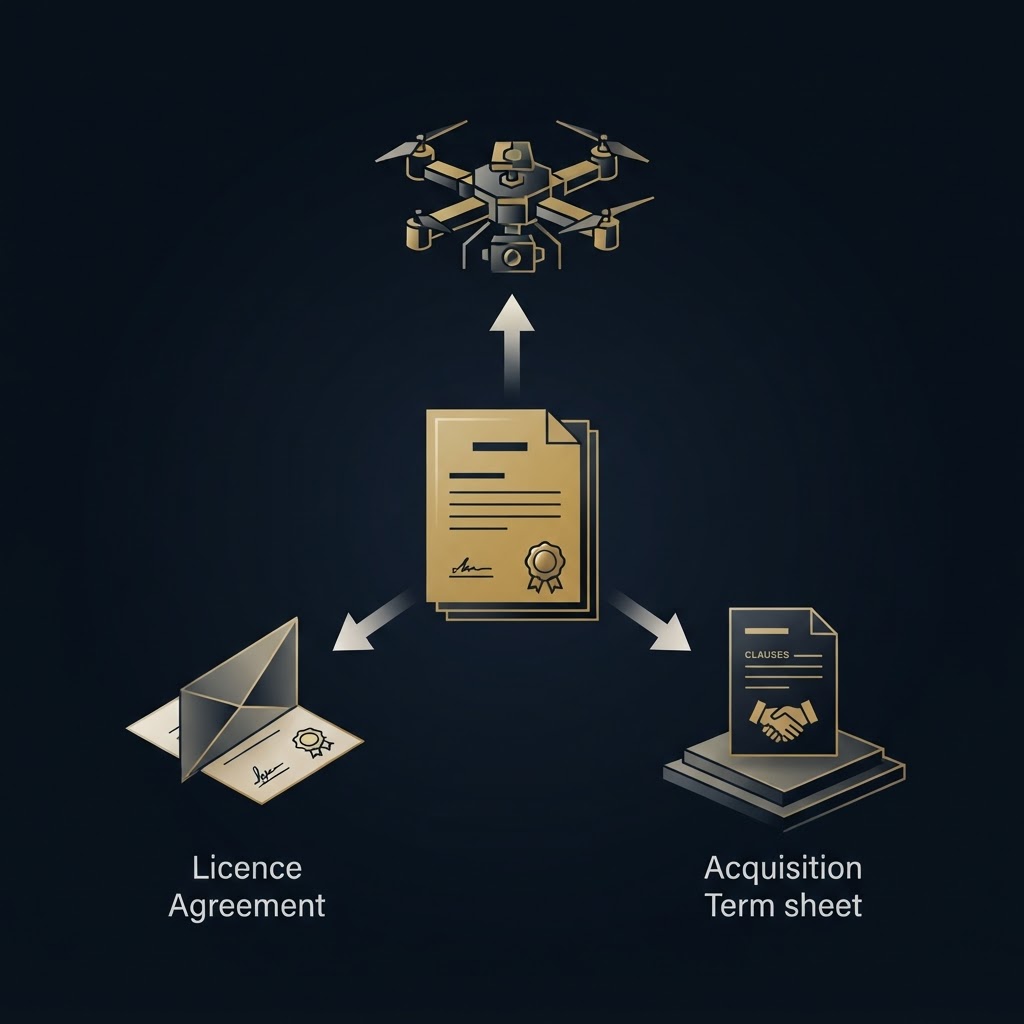
Startup Built Around a Patent: How the Model Works
How a startup built around a patent actually works: product, licensing or exit paths, the five costs, what investors check, and when not to build one.
 Insights
University Spinout Royalties: Rates, Fees and Sublicensing
University spinout royalties explained: published rates by sector, signing and minimum fees, milestones, sublicence splits and what to push back on.
 Insights
How Venture Studios Build Companies: Project to Spin-Out
How venture studios build companies: a technology starts as a project, evidence gates turn it into a company, and deep tech runs on a longer clock.
 Insights
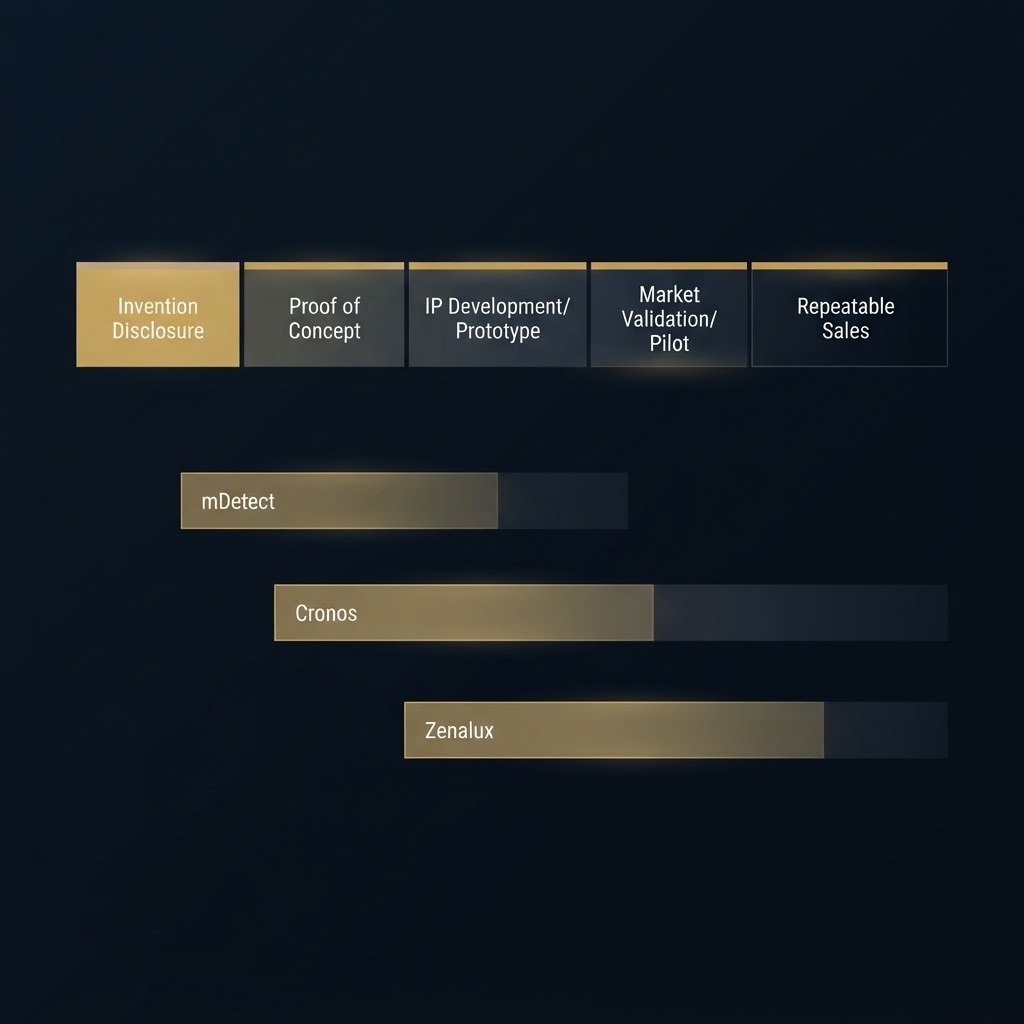
Lab to Market Timeline: How Long Deep Tech Really Takes
Lab to market timeline for deep tech: months to license, years to a patent, 6 to 10 years to revenue. Stage by stage numbers from real spinouts.
 Insights
University License Option Agreement: What Founders Get
A university license option agreement reserves a patent for 6 to 12 months while you raise. Fees, milestones, what you can and cannot do, and when to sign.
 Insights
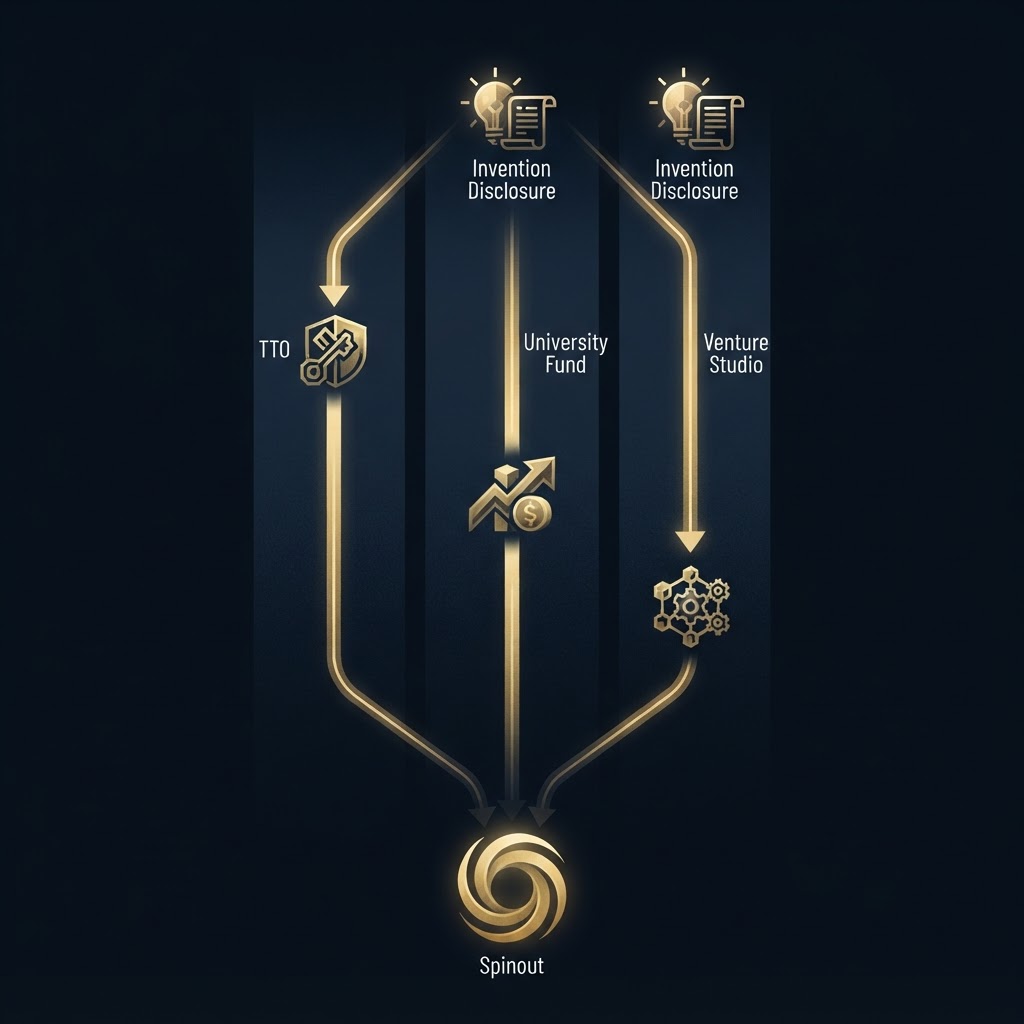
University Venture Studio: How Labs Turn Patents Into Firms
What a university venture studio is, how MIT and Tulane run theirs, how it differs from a TTO, and what happens after the spinout.
 Insights
Venture Studio Shared Team Model: How It Really Works
The venture studio shared team model explained: what gets pooled, why it is faster, where it breaks, and what changes when the venture is deep tech.
 Insights
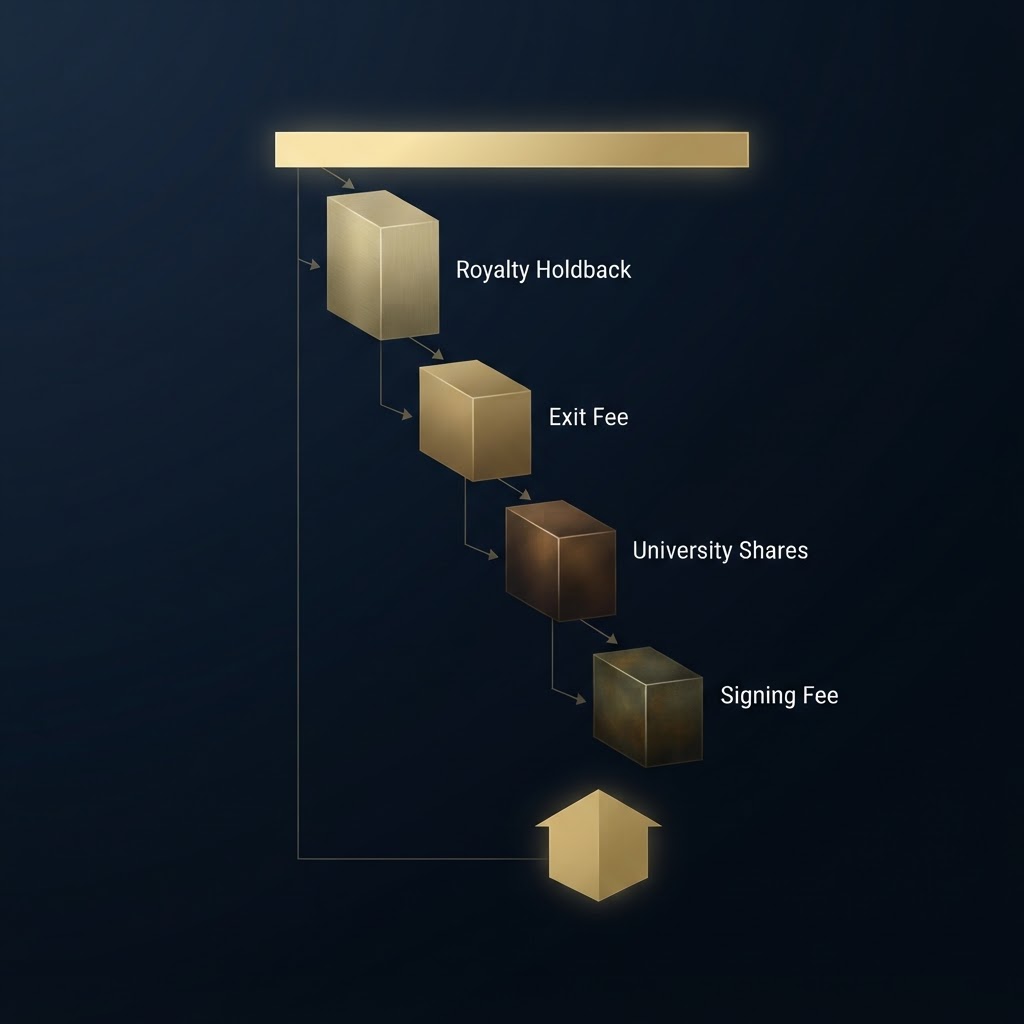
Spinout Transfer Fee: Exit Fees and IP Buy-Outs Explained
A spinout transfer fee is what a university takes when your company or its patents change hands. Published rates, a worked exit, and what to negotiate.
 Insights
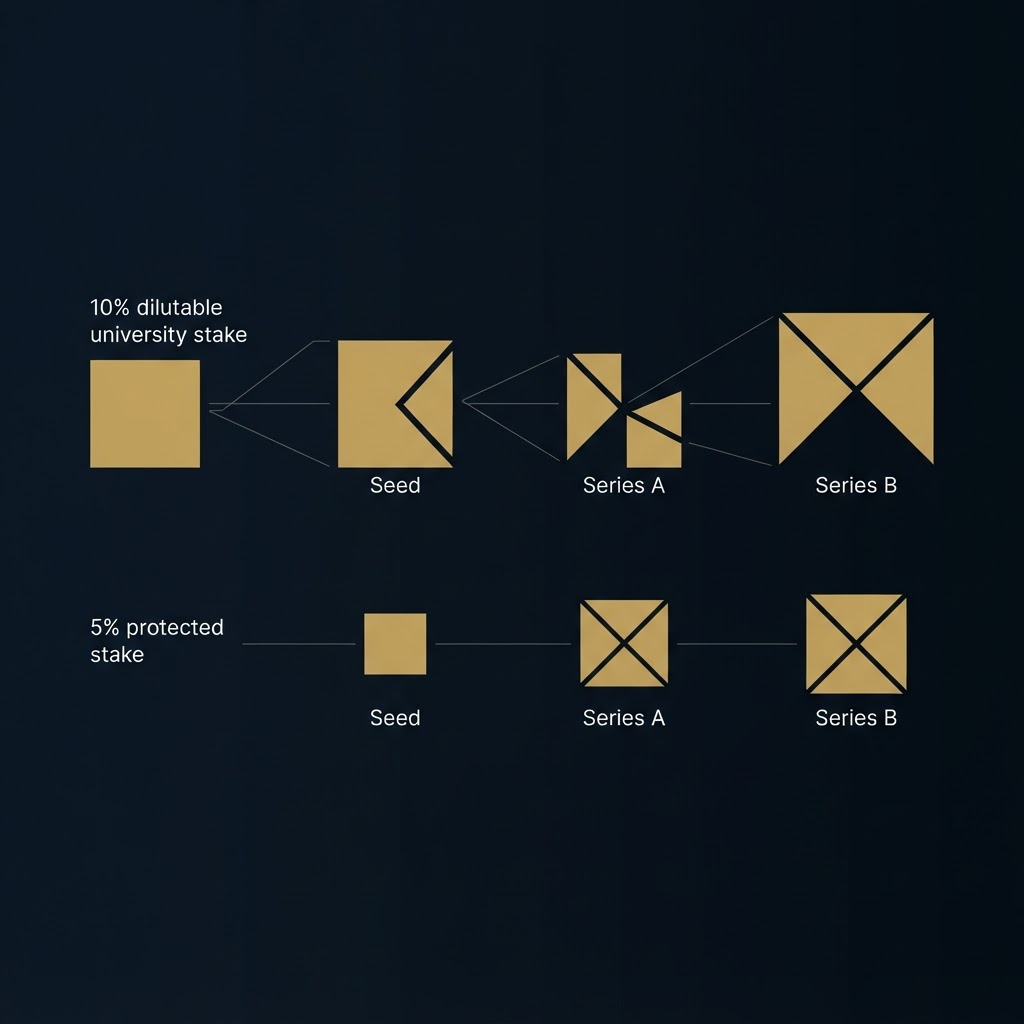
University Spinout Anti-Dilution: What to Push Back On
University spinout anti-dilution explained: how the clause works, where the cap should sit, the 5% vs 10% math, and the terms founders should push back on.
 Insights
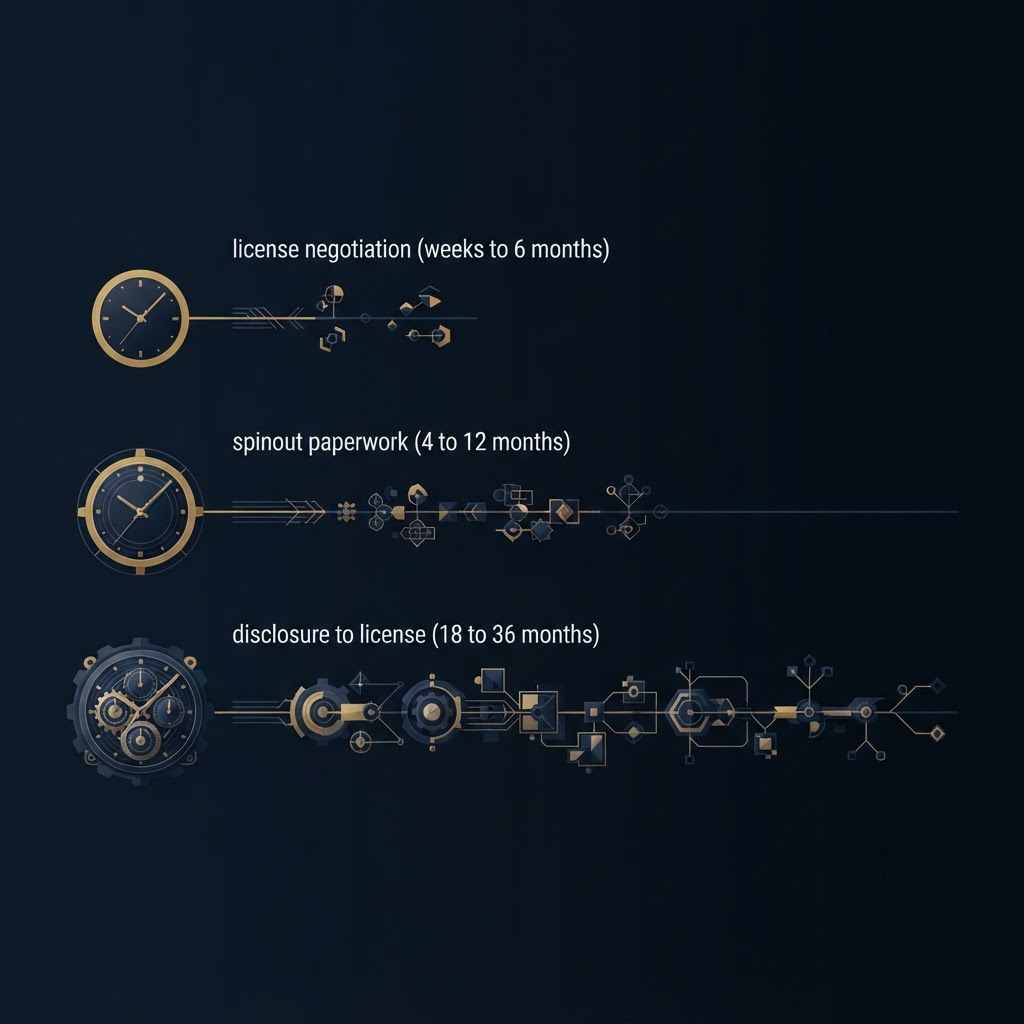
How Long Does a University License Take? Real Timelines
How long does a university license take? Negotiation runs weeks to 6 months, spinouts 4 to 12. The three clocks, the delays, and how to shorten them.
 Insights
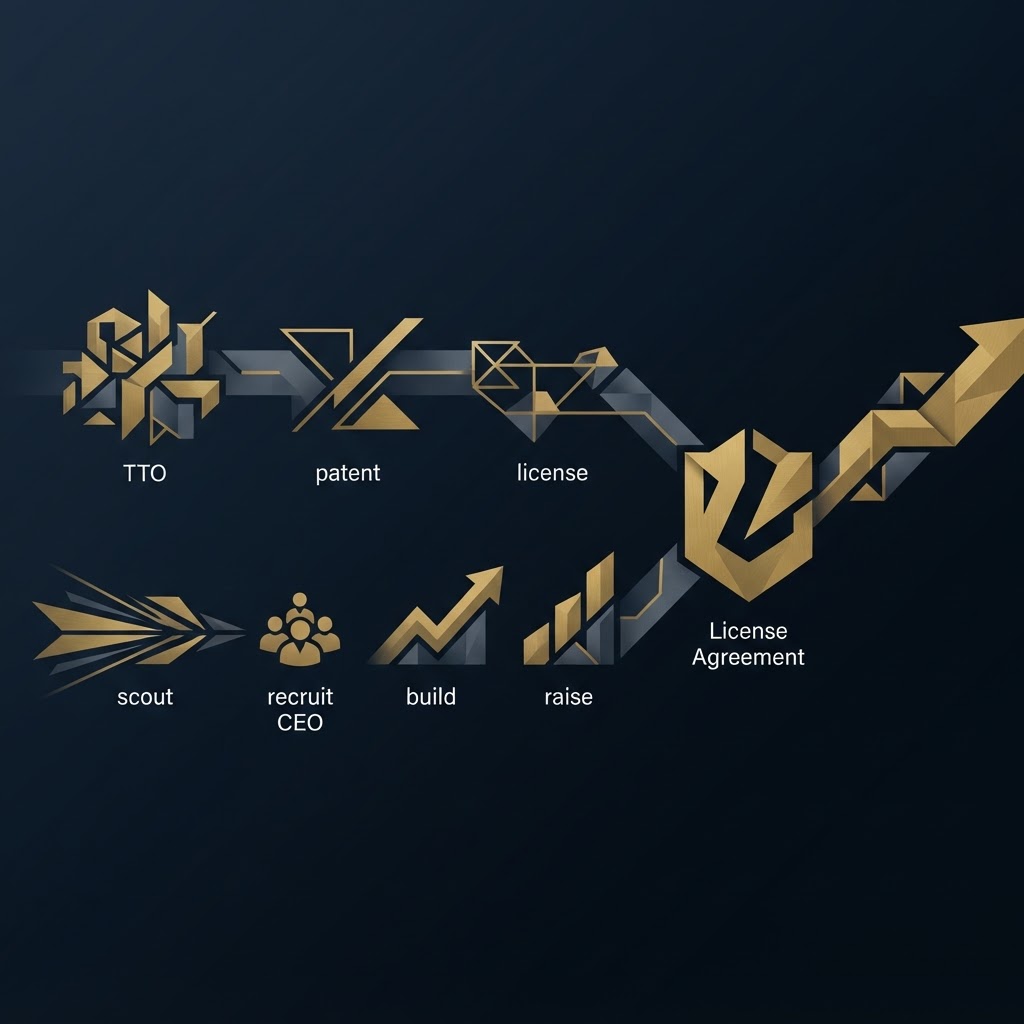
Venture Studio vs Technology Transfer Office: Who Builds?
Venture studio vs technology transfer office: what each does, where they overlap, how equity and licensing change, and who actually builds the spinout.
 Insights
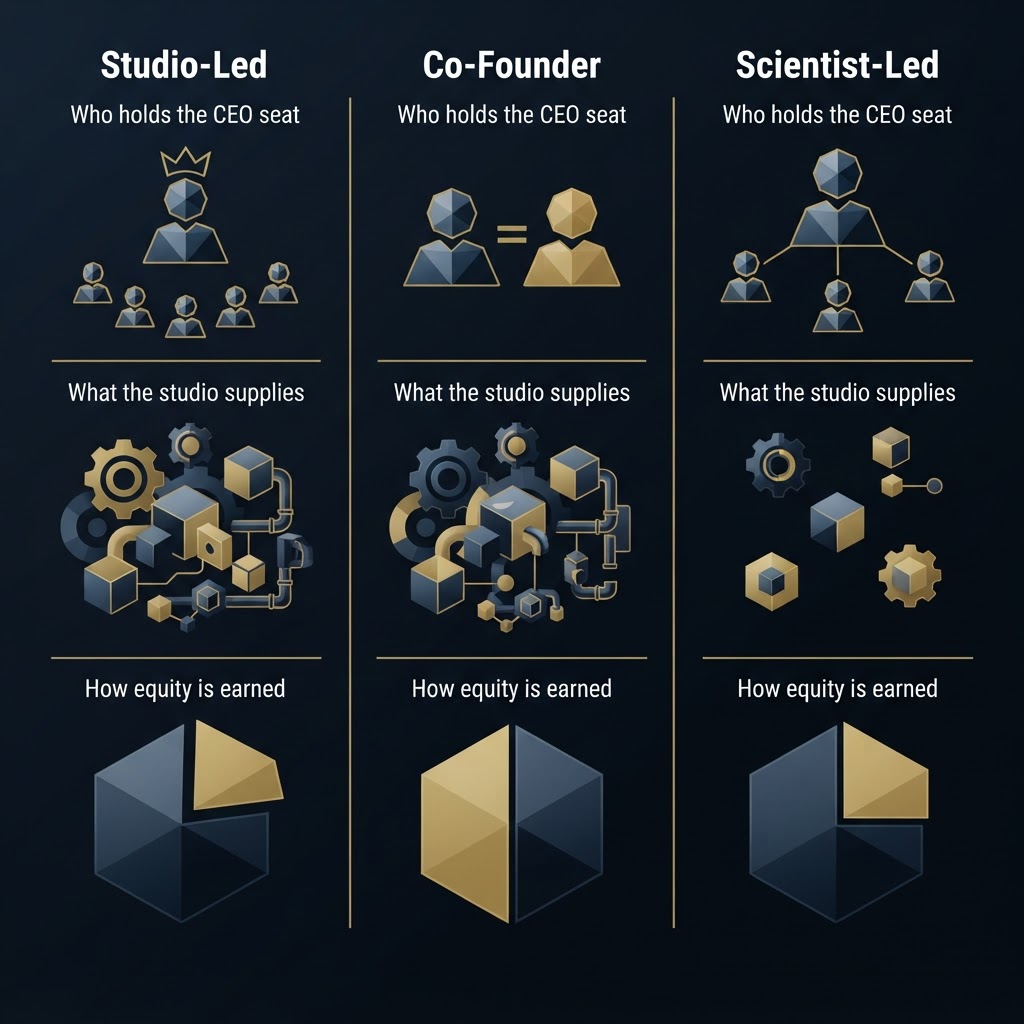
Venture Studio for Scientists: 3 Models, 1 Choice
A venture studio for scientists can make you CEO, CSO or inventor on the cap table. Compare the three models and the questions that decide which fits.
 Insights
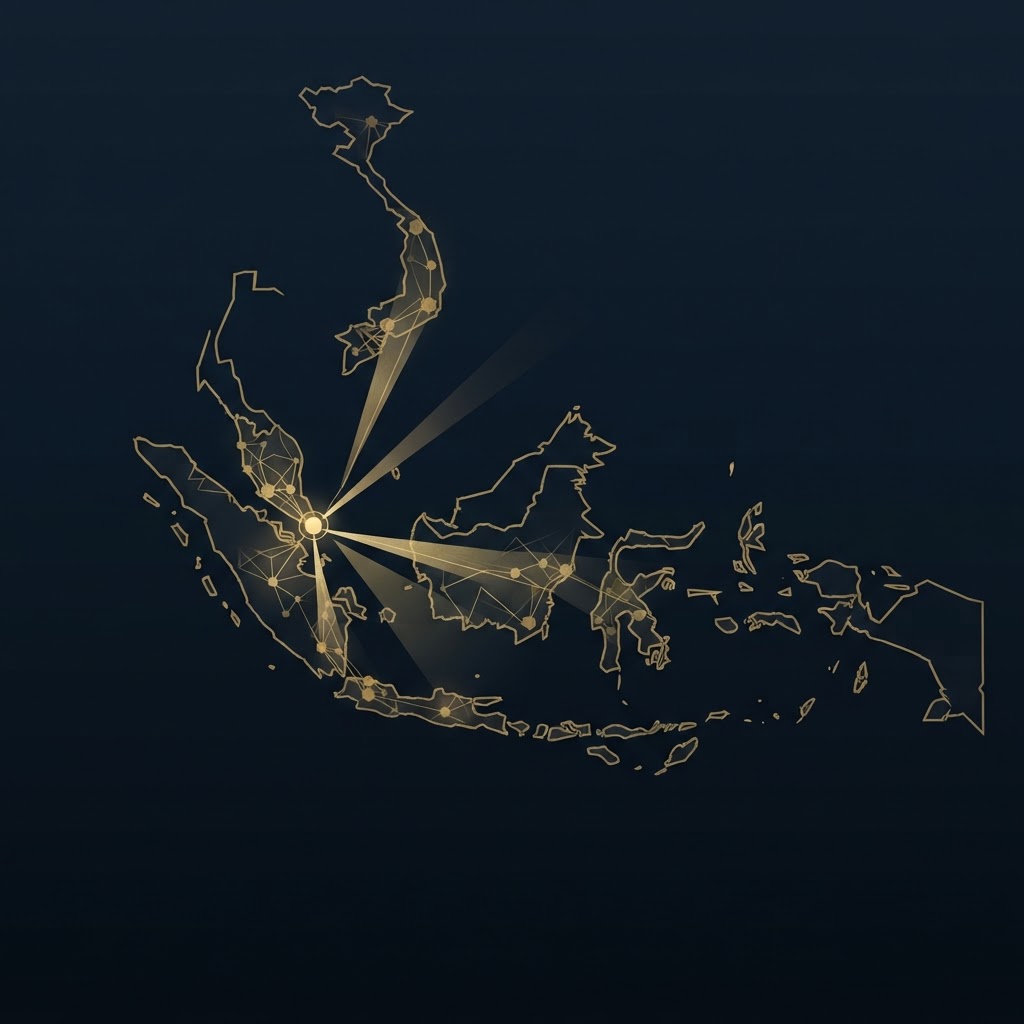
Deep Tech Venture Studios in Southeast Asia: The Real Gap
Southeast Asia deep tech raised $562M in 2025 over half as many rounds. What a deep tech venture studio in the region must do, and how to vet one.
 Insights
Forty Billion At Seventy-Five A Tonne
The Innovation Fund is quoted as EUR 40 billion. That is not a budget line, it is a multiplication: 40 billion divided by the EUR 75 per tonne carbon price the programme assumes gives 533 million tonnes of allowances, and only about a third of the headline has a signed project behind it.
 Insights
Start On A Tuesday, Not On A Deadline
The EIC Accelerator's six 2026 batching dates make it look like an annual competition with a closing date. It is not. The short proposal is open every day of the year and batched on the first Tuesday of the month, and the backward arithmetic from the 4 November deadline is the part most founders never run.
 Insights
Four Million Euros, And One Applicant Is Enough
The EIC Pathfinder Challenges carry EUR 96 million across 3 thematic windows and close on 28 October 2026. Up to EUR 4 million per project, and for this instrument a single applicant is enough: the 3-country consortium rule does not apply to the Challenges.
 Insights
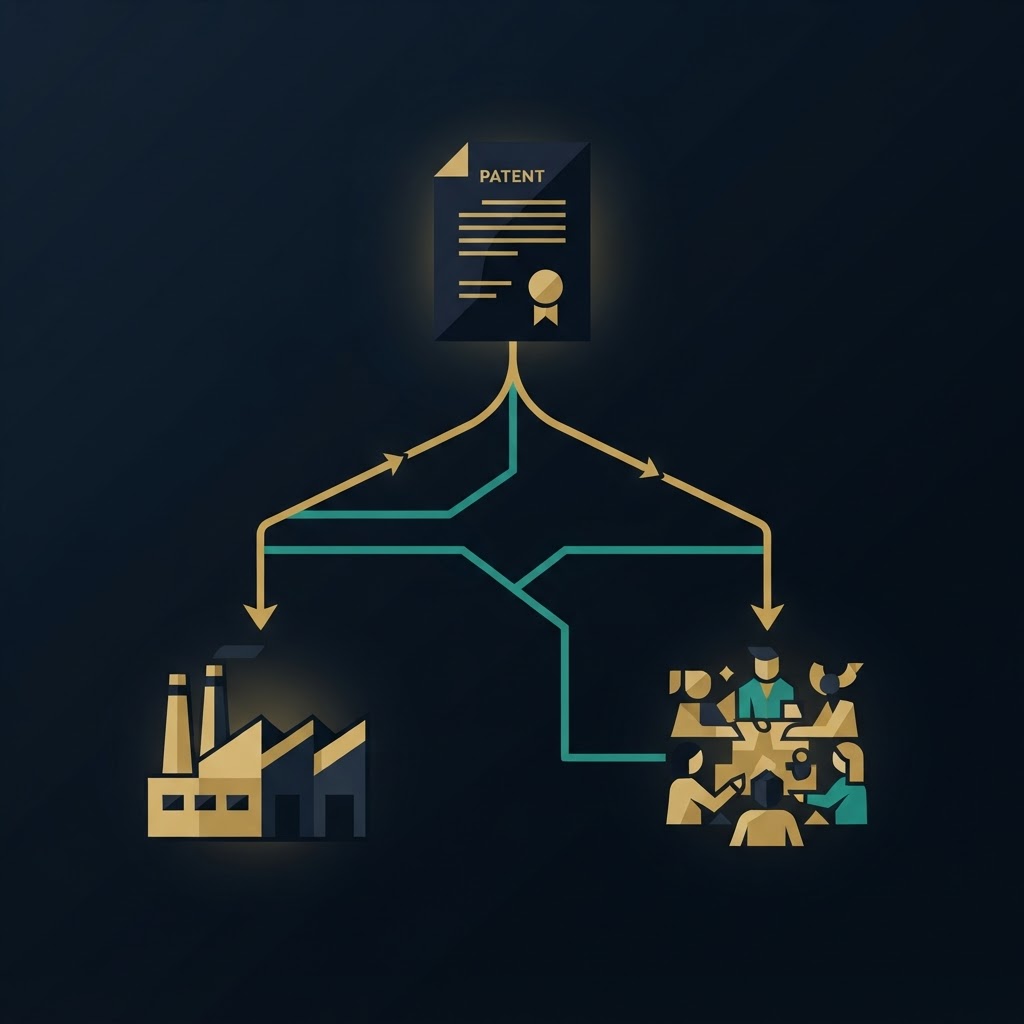
License or Build? The Startup Patent Decision
License or build a startup around your patent? The deep-tech test: complementary assets, patent window, capital, and when to split by field of use.
 Insights
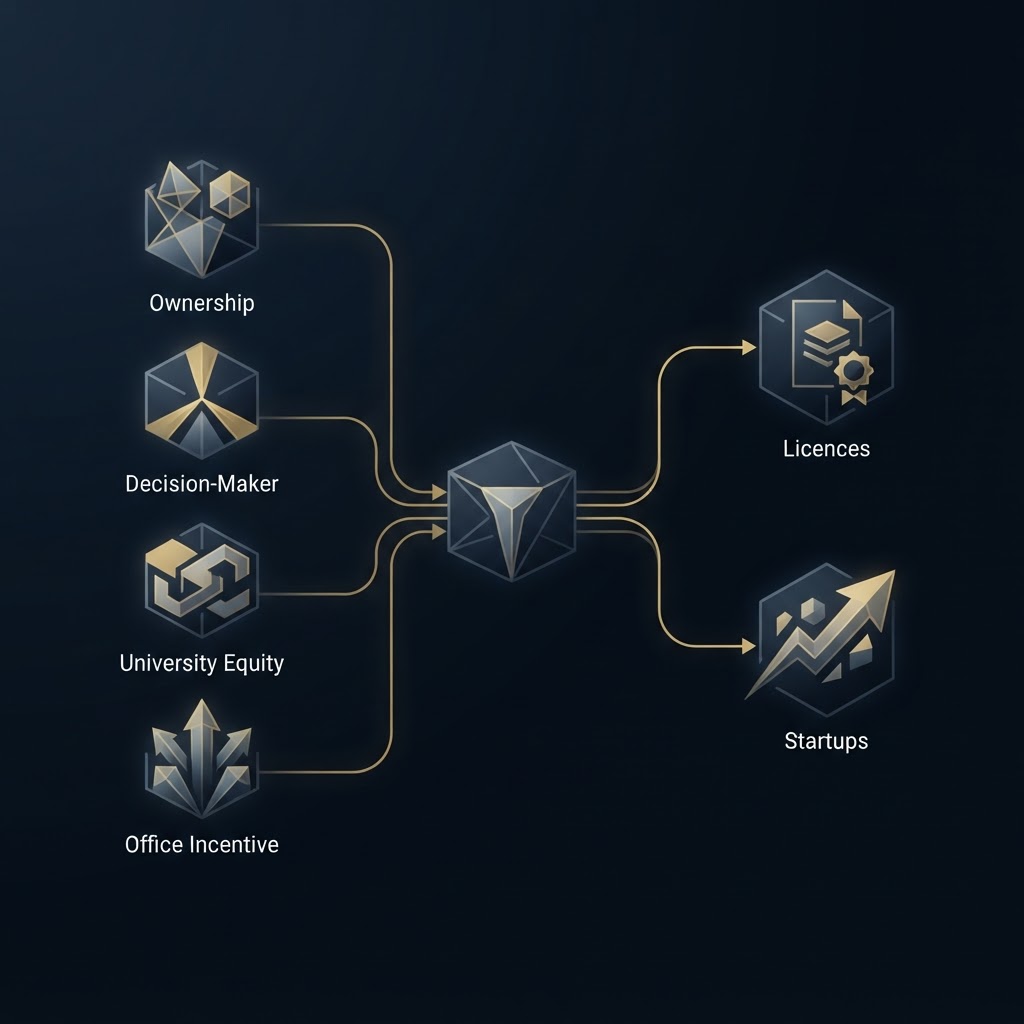
University Research Commercialization: Which Systems Work
University research commercialization is shaped by rules: who owns the IP, who decides, what the university takes. What the US, UK and EU data show.
 Insights
The 25 Per Cent Line Nobody Reads
A window paying up to USD 500,000 per project and 10 projects in total opens on 12 October and shuts on 16 November 2026. At least 25 per cent of the budget has to sit with local partners, and that one clause decides more applications than the idea does.
 Insights
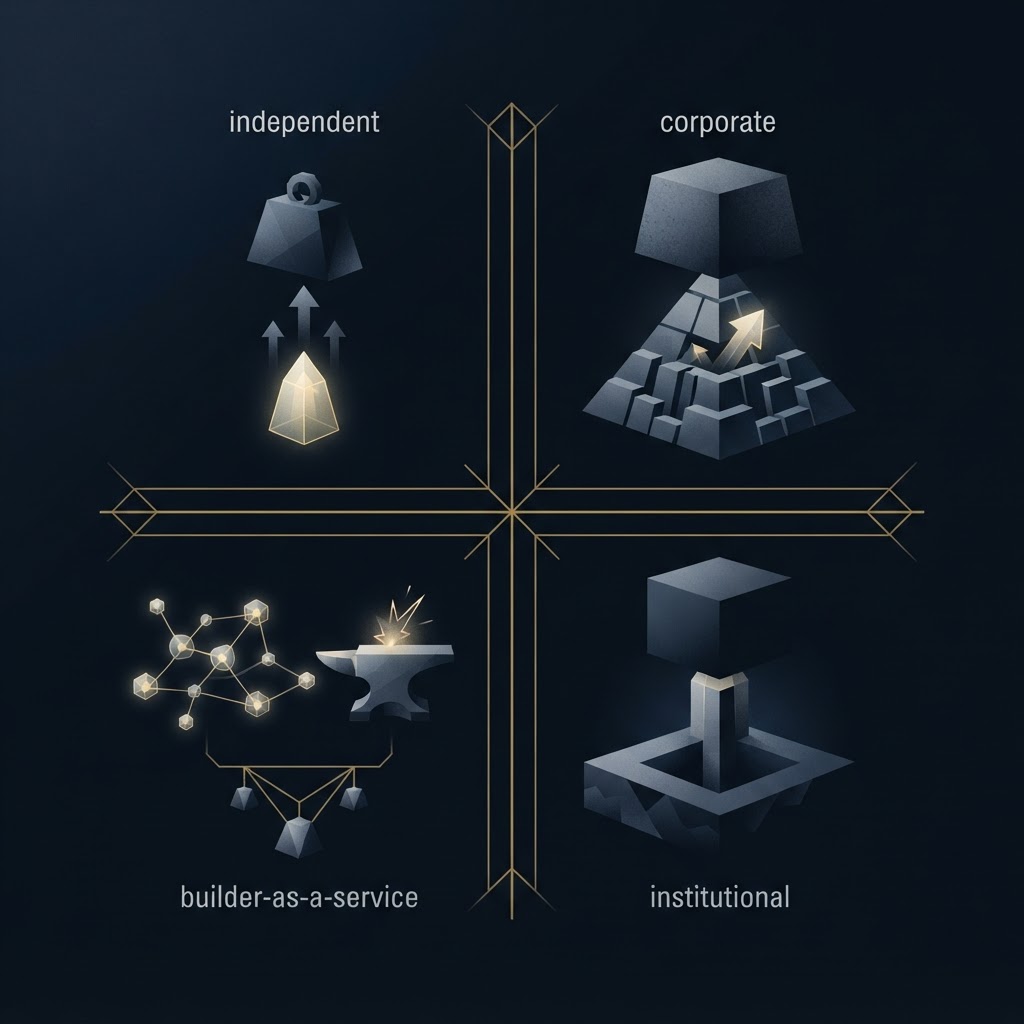
What Is a Venture Builder? The Model, Types and Costs
A venture builder creates companies from scratch and takes founder-level equity. The four types, the real equity ranges, and where the model breaks.
 Insights
The September Cluster Is Already Decided
Five Horizon Europe and LIFE deadlines land inside eight working days from 15 to 23 September 2026. A collaborative proposal takes three to four months, so that cluster was decided in spring. The window still open runs from 28 October to 17 December, and the nearest door needs no consortium at all.
 Insights
How Do Venture Studios Make Money? The Four Revenue Lines
How do venture studios make money? Founding equity at exit, fees, services and distributions, the years each one pays, and how studios survive the gap.
 Insights
The Twenty-Third Country
On 9 June 2026 the European Commission and Australia concluded negotiations on association to Horizon Europe. Australia becomes the twenty-third associated country, and it enters through one pillar only. From 1 January 2027 its entities stop self-funding and can lead a consortium.
 Insights
The Eleven-Day Window
Sweden's Klimatklivet ran its second open round of 2026 from 24 August to 4 September and closed at 16:30. Every application was ranked on one computed ratio, kilogrammes of CO2 equivalent per krona invested, and a breakpoint drew the line wherever the budget ran out.
 Insights
The File Outlives The Project
A grant award opens a file, not a finish line. German public research funding puts the burden of proof on the recipient: a funding code on every invoice, six years of indicator returns, ten years of originals, and material changes reported before anyone asks.
 Insights
EU Funding for Deep Tech Startups: Grants, Equity, Debt
EU funding for deep tech startups is a ladder, not one grant. How to sequence EIC grants, EIC Fund equity and EIB venture debt from lab to scale-up.
 Insights
Commercialization of Academic Research: Why It Stalls
Commercialization of academic research stalls for structural reasons, not weak science. Five bottlenecks, the evidence behind each, and what fixes them.
 Operating Thesis
The Fine Is Priced At Your Turnover
The EU AI Act deadlines are binding until the amending text is adopted, not until it is proposed. And the penalty is a percentage of group turnover, with a lower SME figure that is still measured against the small company own revenue.
 Insights
German Industrial Research Funding: Who Qualifies And Who Does Not
A German grant programme that funds research institutions rather than companies: who is eligible, the three modules and their published ceilings, and why the application window is the whole story in 2026.
 Insights
IP as an Asset Class: What Investors Get Wrong
IP as an asset class explained for investors: the four ways to own it, why patents barely show on balance sheets, and why liquidity is the real problem.
 Insights
What Is Patent Portfolio Management? The Owner's Guide
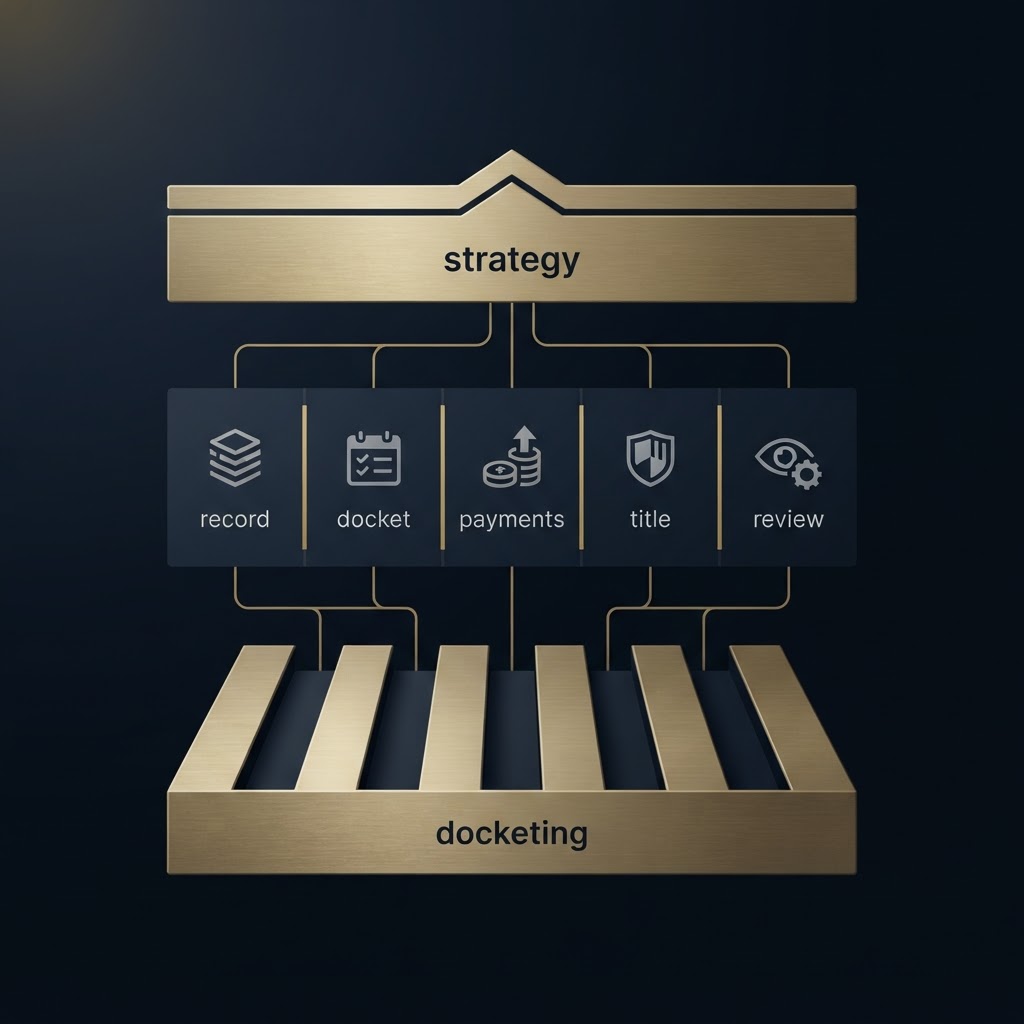
Patent portfolio management is the operating system behind your patents: records, docket, annuity decisions, title and review. Who runs each, and when.
 Insights
Venture Studio vs Private Equity: What Differs
Venture studio vs private equity on stage, control and returns, with real numbers from a deep-tech builder that finances, patents and builds hardware.
 Operating Thesis
Biomethanation Economics: Why The H2 Price Decides Everything
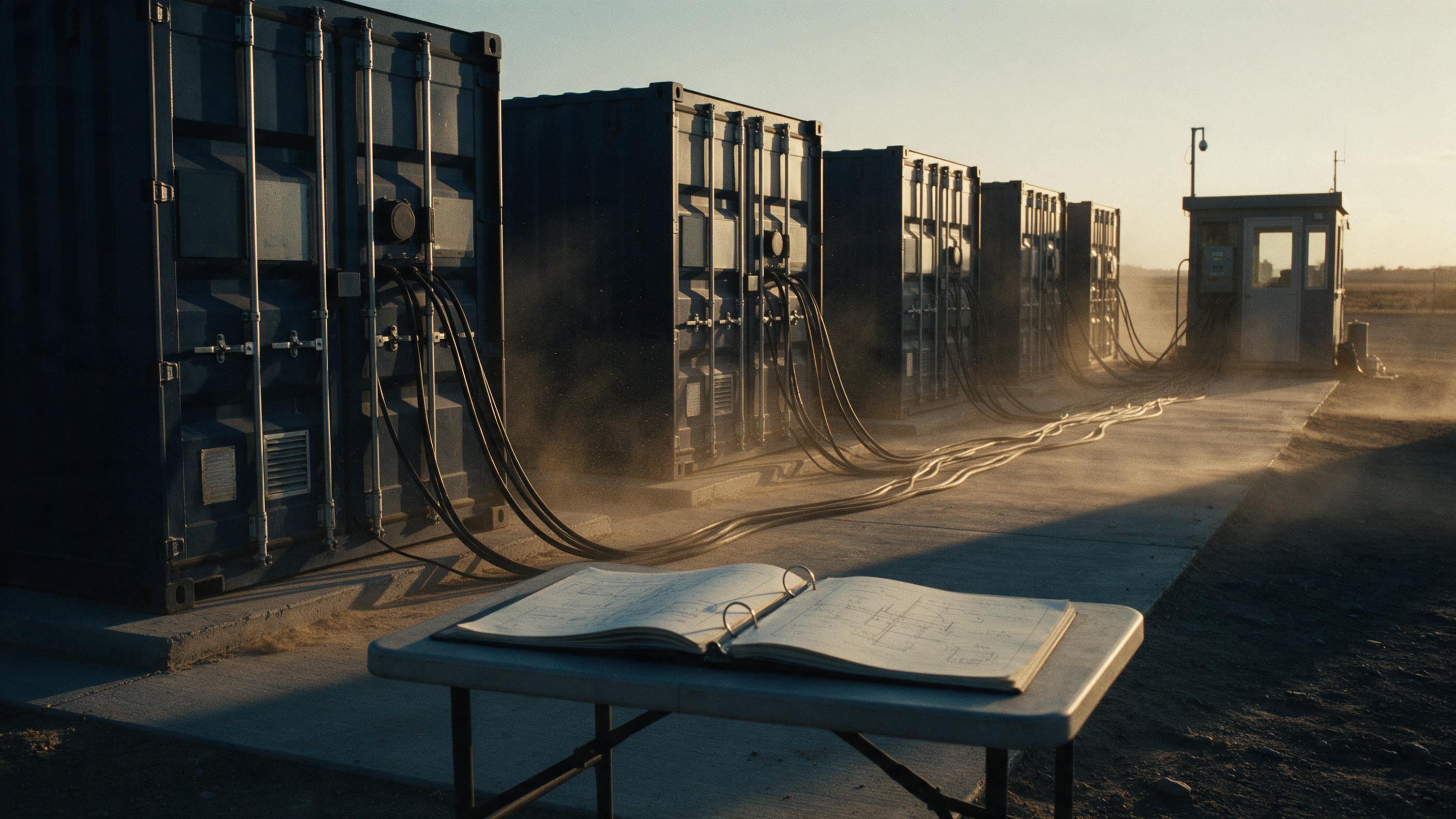
Biological methanation has left the lab: 35 e-methane plants ran in Europe in 2023. The engineering is settled, the patent field has consolidated, and the investment case now rests on one input price.
 Operating Thesis
The Operator Supply Problem: Deep Tech Rarely Stalls On Science
In capital-intensive technology the binding constraint is almost never the invention. It is the operator supply, and you cannot hire twenty of those people in a quarter. They do not exist in the market as a queue. So you have to manufacture them.
 Venture Capital
Why Government-Backed Venture Is the Smartest Capital on the Table
Governments fund between 56 and 70 percent of project capital in the markets we work in. It is published, allocated and almost entirely unclaimed. Non-dilutive money is the most undervalued instrument on the cap table.
 Operating Thesis
The Operator's Discount: Why We Co-Build Instead of Co-Investing
The most expensive thing a founder can buy is time. We eliminate that cost by embedding operators who have already built the exact systems the venture needs.
 Venture Capital
The Funding Gap: Why Breakthrough Science Dies In The Lab
Governments fund 56 to 70 percent of project capital in the markets that matter, and almost nobody claims it. Here is how that money actually moves.
 Insights
Waste to Energy Funding: The Capital Stack, Stage by Stage
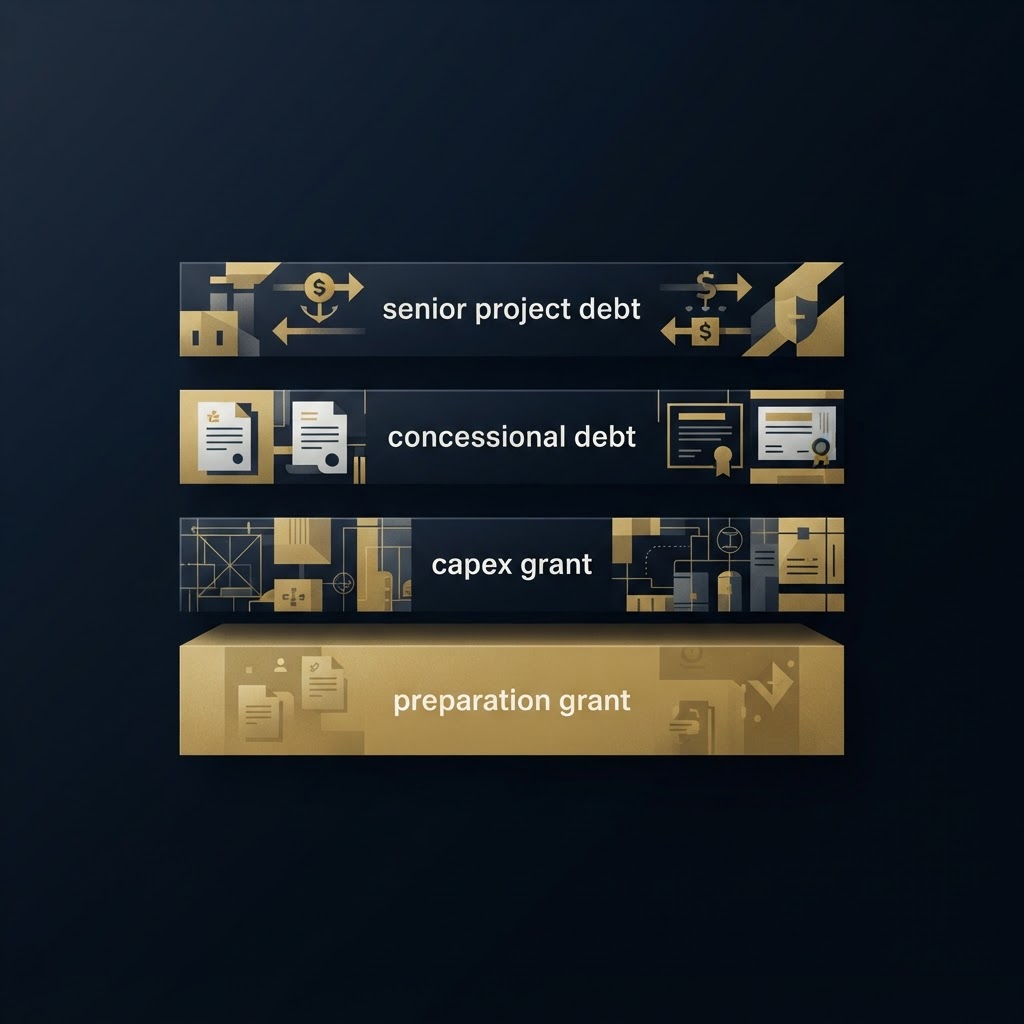
How waste to energy funding really works: preparation grants, capex grants, blended concessional finance and senior project debt, with real numbers.
 Insights
The Waste to Energy Business Model: Who Actually Pays
Three waste to energy business models, sorted by who can contractually pay: the gate fee utility, the single tariff IPP, and on site processing.
 Insights
Patent Licensing Strategy: License, Hold, or Build
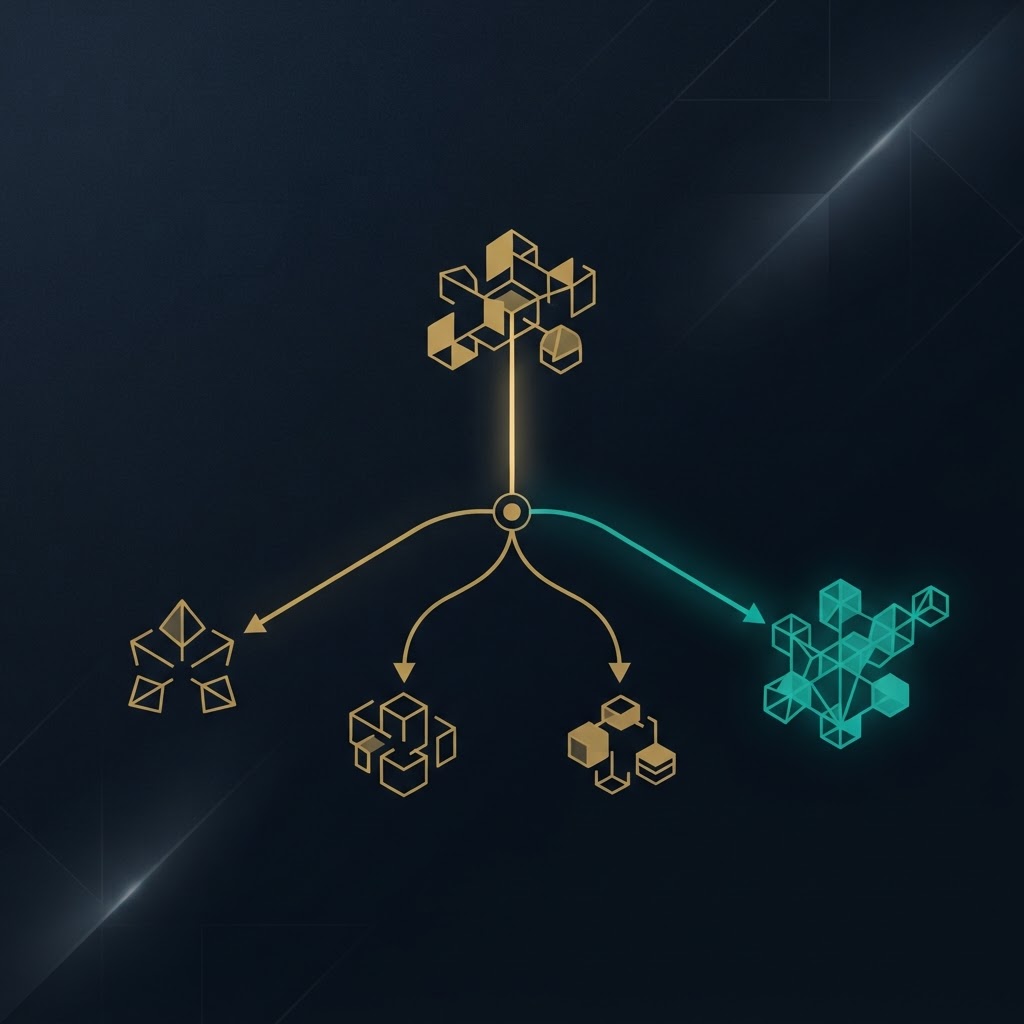
A patent licensing strategy decides which patents to license, hold or build on: the screens, the programme phases, and how a deep-tech builder does it.
 Insights
Patent Portfolio Strategy: Build, Prune, Monetise
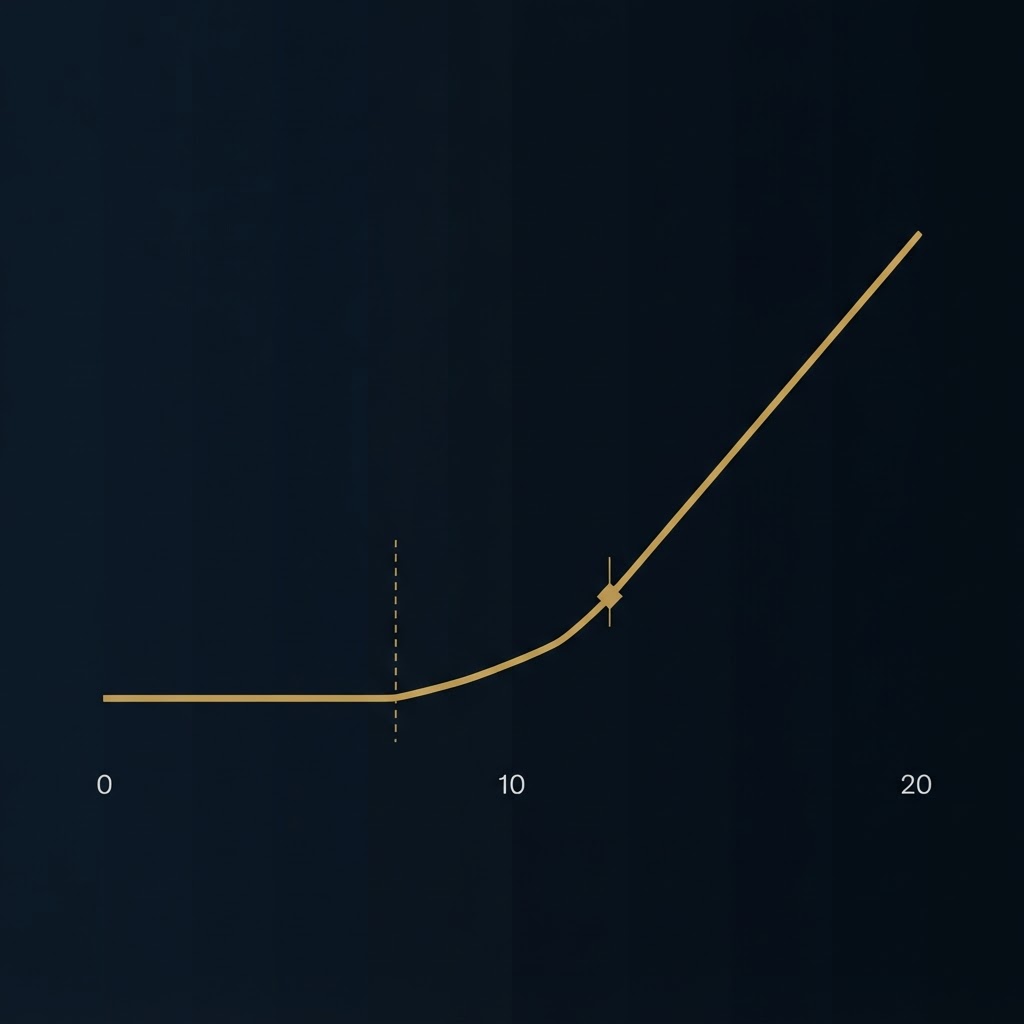
A patent portfolio strategy that survives year 12: what to file, what the twenty year bill really is, when to prune, and what to license or sell instead.
 Insights
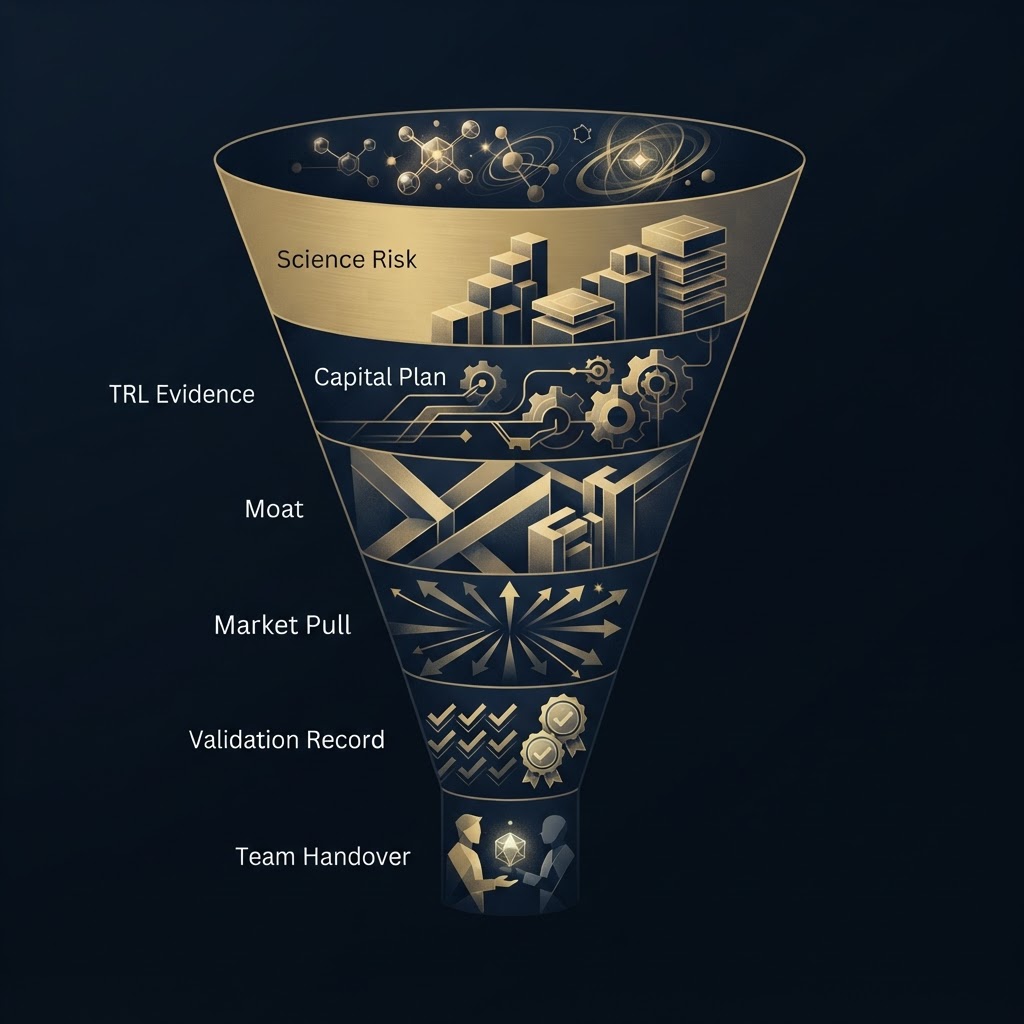
How to Evaluate a Deep Tech Startup: 7-Step Diligence
How to evaluate a deep tech startup: separate science risk from engineering risk, evidence the TRL claim, price the valley, and test the real moat.
 Insights
How to Commercialize University Research: 3 Routes
Commercialize university research: license, spin out or assign. The three routes priced against each other, and the deadline that decides which stay open.
 Insights
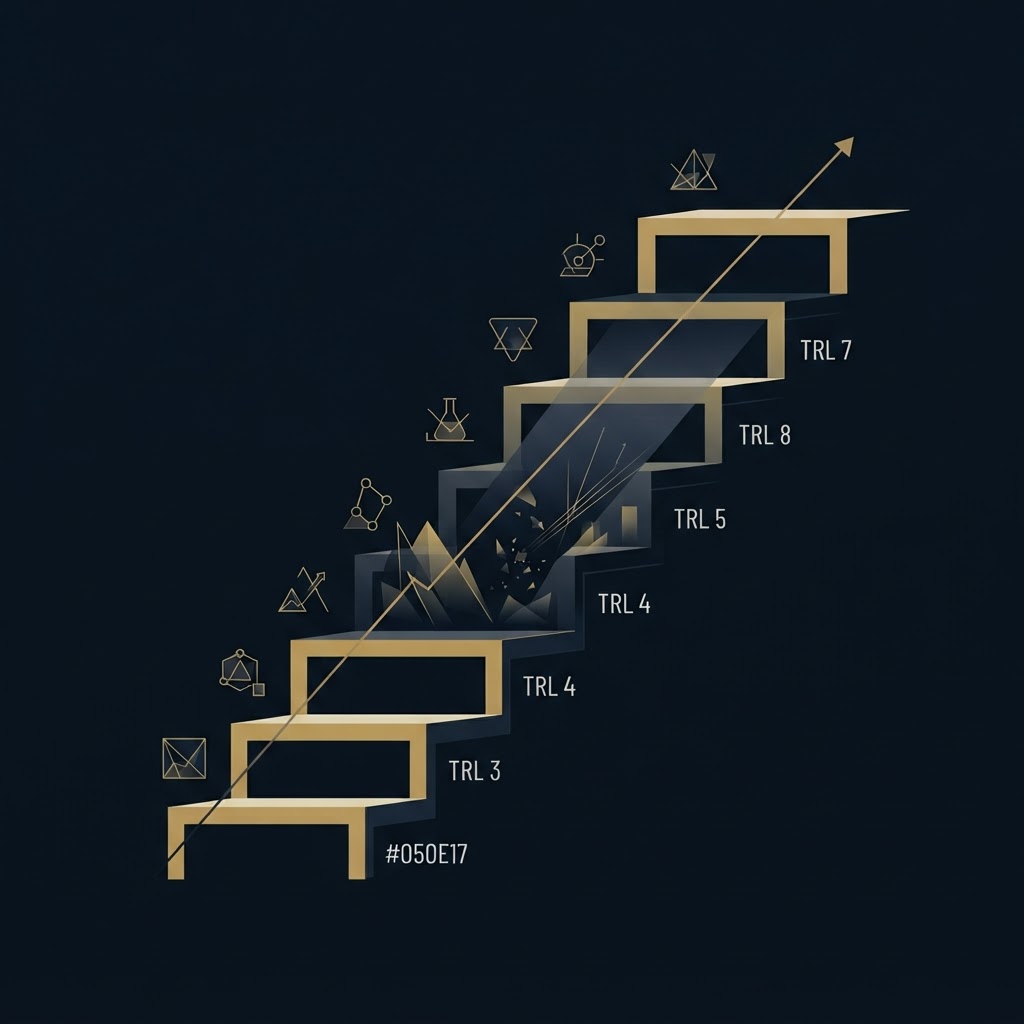
Deep Tech Venture Builders in Europe: How They Differ
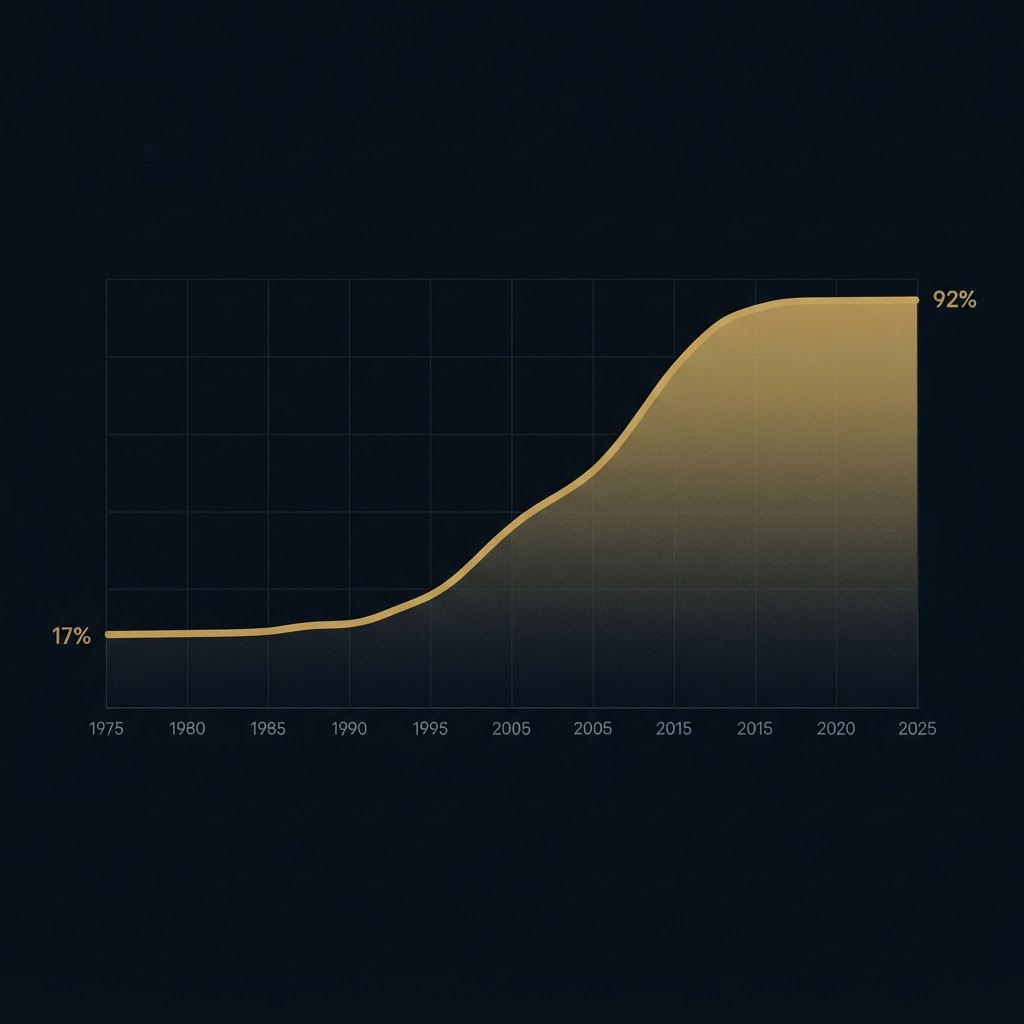
Europe builds 45% of the world's deep tech startups and captures 17% of the funding. The four builder models filling that gap, and how to pick one.
 Insights
Deep Tech Investing for Family Offices: A Field Guide
Deep tech investing for family offices: where patient capital wins, how to diligence science risk, and what a builder with 200+ units deployed sees.
 Insights
Patent Strategy for Deep Tech Startups
Patent strategy for deep tech startups: what to protect, when to file against a ten year development clock, where to file, and what a portfolio costs.
 Insights
Deep Tech vs High Tech: The Difference Is Science Risk
Deep tech and high tech differ by the risk you underwrite first, not by sophistication. The real test, the funding consequences, and the edge cases.
 Insights
Is a Venture Studio Worth It? A Founder's Math
Is a venture studio worth it for founders? Price the equity against real capital, model dilution after two rounds, and see when the answer flips.
 Insights
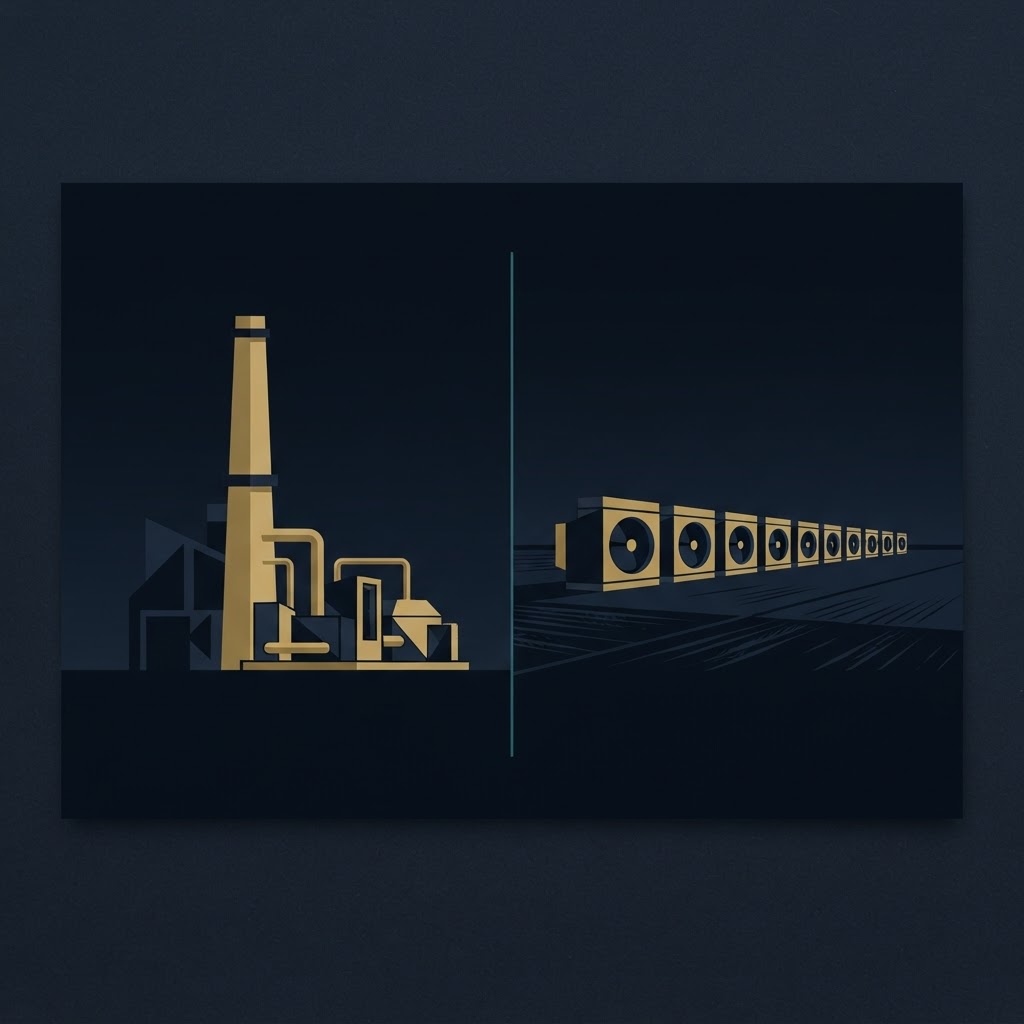
Carbon Removal vs Carbon Capture: Same CO2, Two Markets
Carbon removal vs carbon capture: same molecule, different business. Where the CO2 comes from decides credit eligibility, price per tonne and who pays.
 Insights
What Is Research Commercialisation? Definition and Routes
Research commercialisation is how lab science reaches a market. The plain definition, the four routes out, real timelines, and who keeps what.
 Insights
Venture Studio vs Venture Capital: The Real Trade
Venture studio vs venture capital: equity ranges, the 10-year fund clock, who carries which risk, and why deep-tech founders usually need both.
 Insights
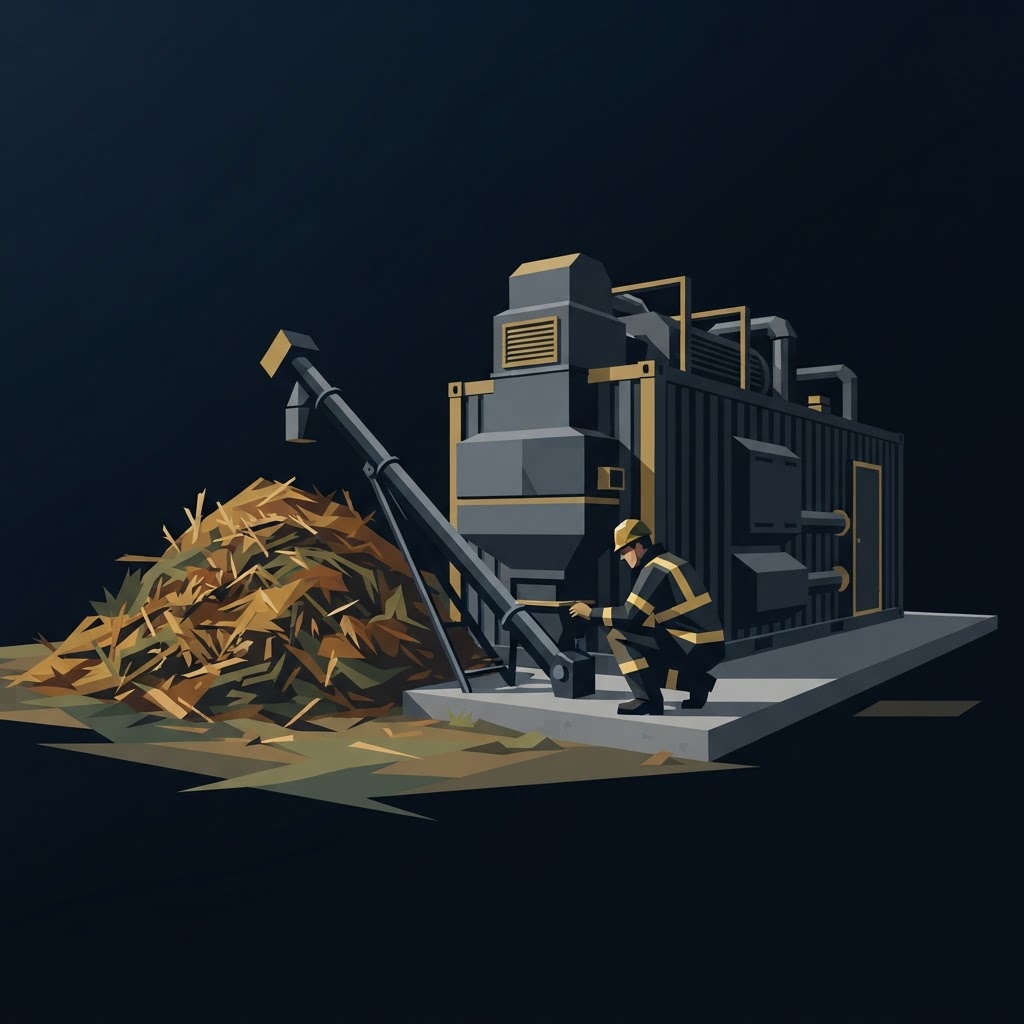
Carbon Removal Technology: What Actually Delivers Tonnes
Carbon removal technology ranked by verified tonnes delivered, not tonnes contracted: biochar, BECCS, DAC, enhanced weathering and real costs.
 Insights
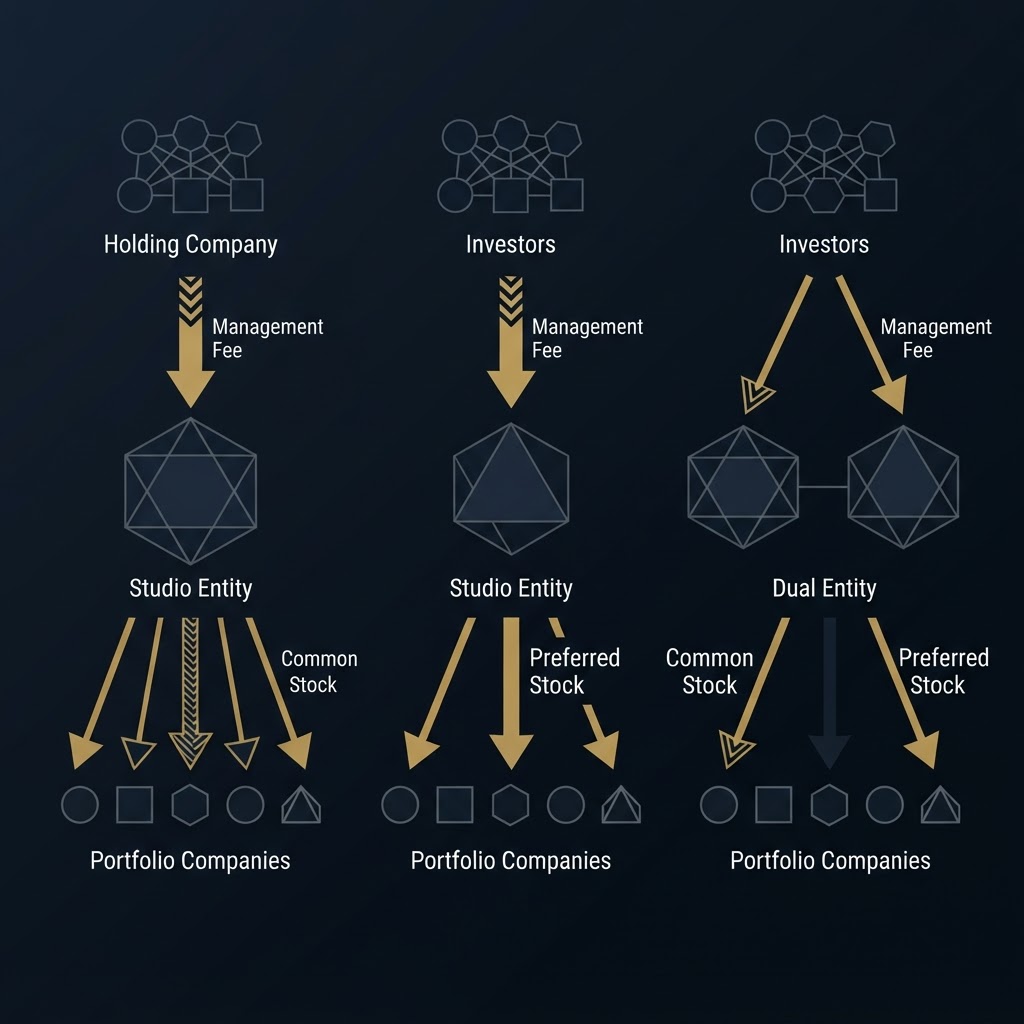
Venture Studio Business Model: Holdco, Fund or Hybrid
How the venture studio business model works: holdco, fund and dual entity structures, where the operating cost sits, and the returns each one has to beat.
 Insights
What a Deep Tech Venture Builder Actually Does
A deep tech venture builder sources lab science, finances it, patents it and staffs it. The five jobs, the equity cost, and how to spot a fake one.
 Portfolio · Zero-X
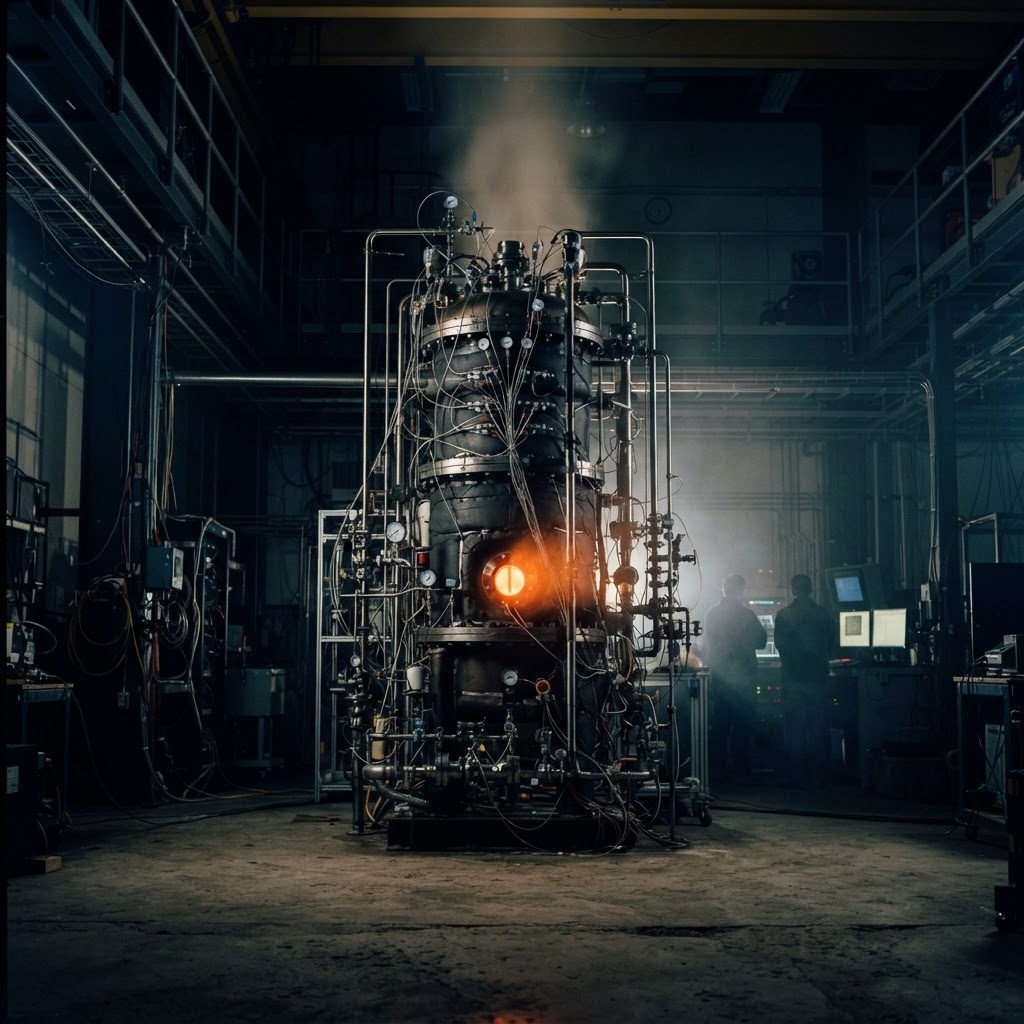
120 Hours, Under 3% Variance: The EQL-150 Prototype Completes Its Longest Continuous Run
EX Venture portfolio company Zero-X ran its EQL-150 prototype gasifier for 120 uninterrupted hours, holding syngas LHV variance below 3% and past the 72-hour mark where decay once appeared. The run validates a new condition-based ash extraction logic and produces the program's anchor reference dataset — proof engineering that makes the machine sellable.
 Product
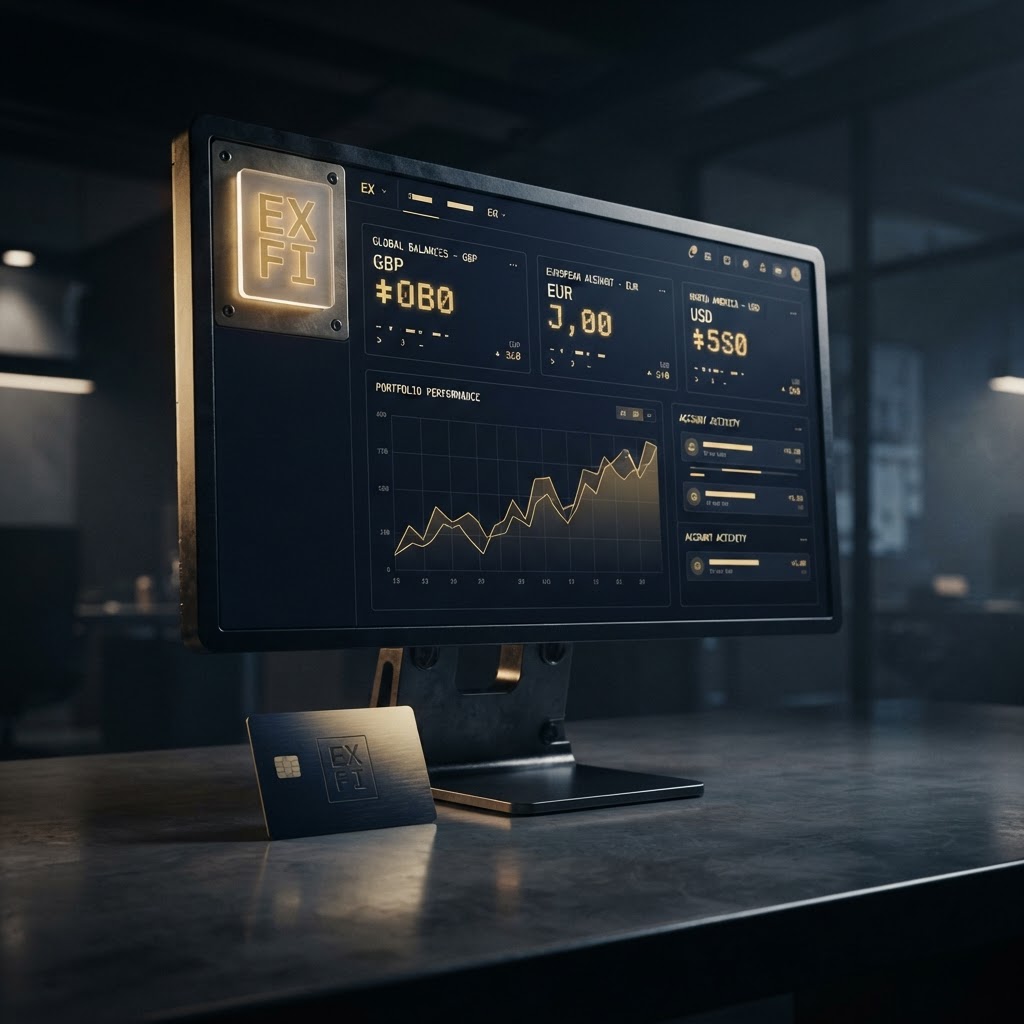
EX FI enters beta: the first 100 personal bank accounts are now open
EX FI, the FCA-regulated financial arm of EX Venture, has quietly opened its personal accounts to beta. The first 100 accounts are being onboarded now — multi-currency, instant global payments, no monthly fee. Reach out to get yours opened.
 Insights
How Do Venture Studios Work? Idea to Spin-Out, Step by Step
How venture studios work in practice: idea sourcing, the kill funnel, the studio bench, cap table at spin-out, and what changes when the science is hard.
 Insights
What Is a Venture Studio? Model, Economics, Deep Tech
A venture studio builds companies from scratch and takes equity for it. The model, the real equity ranges, the performance data, the deep-tech case.
 Portfolio · EX IX
A liquidity marketplace for the world's intellectual property: EX IX launches
EX IX has opened its patent liquidity marketplace to investors, with 24 patent families filed in its first production run and a pipeline of roughly 100 more validated and awaiting filing.
Available for advisory work, board seats and media appearances.
Julien Uhlig advises boards and funds and briefs newsrooms across Europe and North America. Enquiries are read personally.