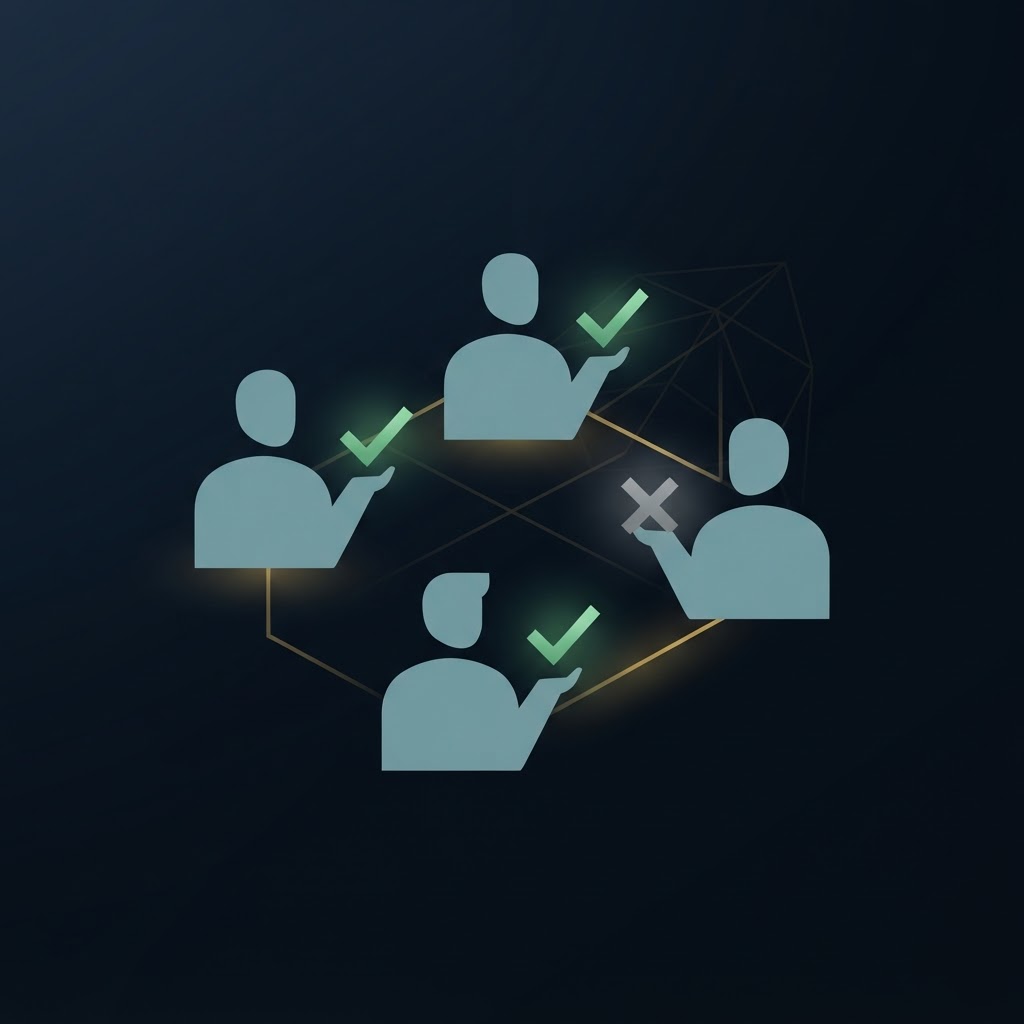
EIC Accelerator Step 1 is the short proposal: a 12-page form, a pitch deck of up to ten slides and a video of up to three minutes. Four remote experts read it and each votes GO or NO GO. Three GOs and you are invited to write the full proposal. Two NO GOs and you are out. That is the whole mechanism, as set out on the official EIC Accelerator page.
It sounds light. It is not anymore. Step 1 now removes about four of every five applicants, and every rejection spends one of a small number of attempts you get under Horizon Europe. This guide is the founder-side version: what each piece is for, what an evaluator needs to see to justify a GO, and when you should not submit yet. If you are still mapping the wider landscape, start with our overview of EU funding for deep tech startups.
What Step 1 is, in one table
| Item | What the EIC asks for |
|---|---|
| Form | 12 pages answering questions on innovation, market and team |
| Pitch deck | Up to 10 slides, PDF, no template |
| Video | Up to 3 minutes, up to 3 core team members |
| Evaluators | 4 remote experts, each GO or NO GO |
| Pass rule | At least 3 GOs out of 4 |
| When | Any time; batched the first Tuesday of each month, 5pm Brussels |
| Result | Normally within about 4 to 6 weeks |
Step 1 is the first of three selection steps. A GO opens the full proposal (Step 2), and the best full proposals go to a face-to-face interview with the EIC jury (Step 3).
Why Step 1 got harder
Older advice calls Step 1 a light screen. The data says otherwise. Segler Consulting published the Commission's Step 1 numbers: 58.8 percent of short proposals got a GO in 2021, 63.4 percent in 2022 and 60.6 percent in 2023. Then 33.3 percent in 2024 and 21.7 percent in 2025, with partial 2026 data at 21.3 percent.
The cause is the rule, not the applicants. A proposal used to pass with two GOs out of four. It now needs three. Segler also reports the current evaluation time at 51 days, so plan for about seven weeks rather than the official four to six.
One evaluator who is not convinced is no longer enough to sink you, but two are. In practice that means the proposal has to survive its weakest reader. For how this stage feeds the rest of the funnel, see our breakdown of the EIC Accelerator success rate.
The 12-page form, section by section
The form is the core of the assessment. The EIC guide for applicants (WP26) sets out three criteria. Write each section so an evaluator can find the evidence for a GO without hunting for it.
Part A and company information
Acronym, title, abstract and keywords, then your PIC number and details of the CEO. A natural person who has not yet set up a company simply gives their name. Check your entity first: our guide to EIC Accelerator eligibility covers who can apply and from where.
Excellence: novelty, TRL and IP
The guide asks three questions:
- Is it deep tech? Does it come from cutting-edge science or technology, and is it a significant improvement in cost or performance over existing or alternative solutions?
- Has it completed all aspects of TRL 5? That means validation in a relevant environment for the application.
- Is the IP protected? Adequate protection and a sound IP strategy for the target market.
Two traps live here. Rasph points out that TRL applies to the integrated innovation: a component at TRL 7 does not lift a system at TRL 4. And an overstated TRL weakens everything downstream, because the plan and budget stop matching the maturity you claimed. Name the environment where you validated and say why it is representative.
Novelty claims need a comparison. Novel against what, measured how? Give the number.
Impact: market and realistic share
The question is short: what is the total market, and what share can you realistically take? A Swelife walkthrough of the form adds what evaluators look for behind it: who pays and for which use case, a simple revenue model, traction such as pilots, letters of intent or paying customers, and a first view of impact at EU level.
A big market with no named buyer is weaker than a smaller one with buyers attached. Top-down market slides convince nobody on their own.
Risk, implementation and need for EU support
This is the criterion founders underwrite, and the one that decides more cases than it should. The guide asks:
- Does the team have the skills to develop the innovation and scale the company?
- Are gaps identified, including gender balance, with a credible plan to fill them?
- Have you shown early traction with investors?
- Is the financing need significantly higher than market actors can finance alone?
The last question is the EIC's reason to exist. It funds companies where the risk is too high for private investors alone. A company that could raise the round privately is, by design, a weak fit. Say how much you will raise, when, from whom, and why that round cannot close without the EIC. Rasph calls a missing financing gap the most common structural weakness, and the hardest to fix late.
The 10-slide pitch deck
There is no template. The guide asks for a PDF of up to ten slides and suggests two to four of them on the business model, target market and growth forecast. Use the deck for what the form cannot hold: images, data, tables.
A workable order: who you are and what you do; the problem and why current solutions fail; your solution; what is new, including IP and current versus target TRL; proof it works in a relevant environment; market, drivers and competitors; how you make money and current traction; team, advisors and partners; the investment case and why the EIC is needed; impact for Europe.
Remember who reads it. The Access2EIC annotated template notes that the Step 1 deck is only read by evaluators, while the deck you submit at Step 2 is the one you present at interview. So the Step 1 deck must work without you in the room.
The 3-minute video
Up to three minutes, up to three core team members, explaining the innovation and the motivation behind the application. The guide says to keep it simple: the point is to show the team. It can be in any EU language, with subtitles.
Two rules matter more than production value. Three people is a hard limit, so a polished film with five founders fails a formal condition. And the numbers must match. TRL, market size and funding request should be the same in the form, the deck and the video, because evaluators check for contradictions.
Why short proposals get a NO GO
The patterns repeat:
- Writing to the headings, not the criteria. Every criterion needs explicit evidence somewhere.
- An overstated TRL. It undermines the plan and the credibility of the team.
- Inconsistency across the three documents. Different figures read as a team that has not agreed on its own story.
- Treating the video as marketing. Evaluators assess the team and the substance.
- No financing gap. If private money would do it, the EIC should not.
None of these is about the quality of the technology. That is the frustrating part, and the useful one: most NO GOs are fixable before you submit.
After the result
You receive a GO or NO GO, normally with an Evaluation Summary Report holding the evaluators' comments.
If you get a GO
You can submit a full proposal at a later batching date. It is much bigger: a 20-page form, a new deck, an implementation plan, financial information, letters of intent, a freedom-to-operate analysis and another video. Before you start, decide the funding type: grant only or blended finance, and what the EIC Accelerator investment component means for your cap table. Our guide on how to apply for the EIC Accelerator covers Steps 2 to 4.
If you get a NO GO
Read the comments and fix the cause, not the wording. The EIC Accelerator FAQ caps a company at three unsuccessful submissions of the same or an improved proposal, at any stage, for the rest of Horizon Europe. A rejection at Step 1 counts. Resubmitting the same weaknesses a month later spends a second attempt to learn nothing new.
The operator view: Step 1 spends an attempt
At EX EPIC we finance, patent and deploy deep tech that would otherwise stay in the lab, with a EUR 160M+ capital track record and Zero-X waste-to-energy systems deployed as 200+ units across 11 countries, according to exventure.co. From that side of the table, Step 1 looks less like a form and more like a short investment memo with a strict reader.
So we treat it in that order. Fix the structure first: the right entity, a clean cap table, a TRL you can prove. Then make the financing gap real, with a named round and investors already talking. Only then write. A team with those three things usually finds the 12 pages easy. A team without them finds no amount of writing closes the gap.
FAQ
Can I submit an EIC Accelerator short proposal at any time?
Yes. Step 1 is continuously open. Proposals are batched for evaluation on the first Tuesday of each month at 5pm Brussels time.
Does the Step 1 video have to be in English?
No. It can be in any EU language and may include subtitles. Evaluators judge it in the context of a programme aimed at European and international markets, so make it easy to follow.
Can I skip Step 1?
Only through two routes. Fast Track covers proposals from existing Horizon Europe or Horizon 2020 projects, and Plug-In covers proposals from certified national or regional programmes. Both go straight to the full proposal.
Can I declare a dual-use innovation at Step 1?
Yes, by ticking the box in Part A. It brings no scoring advantage, and you must show a credible business case in both civil and defence markets. You can change the choice between the short and full proposal.