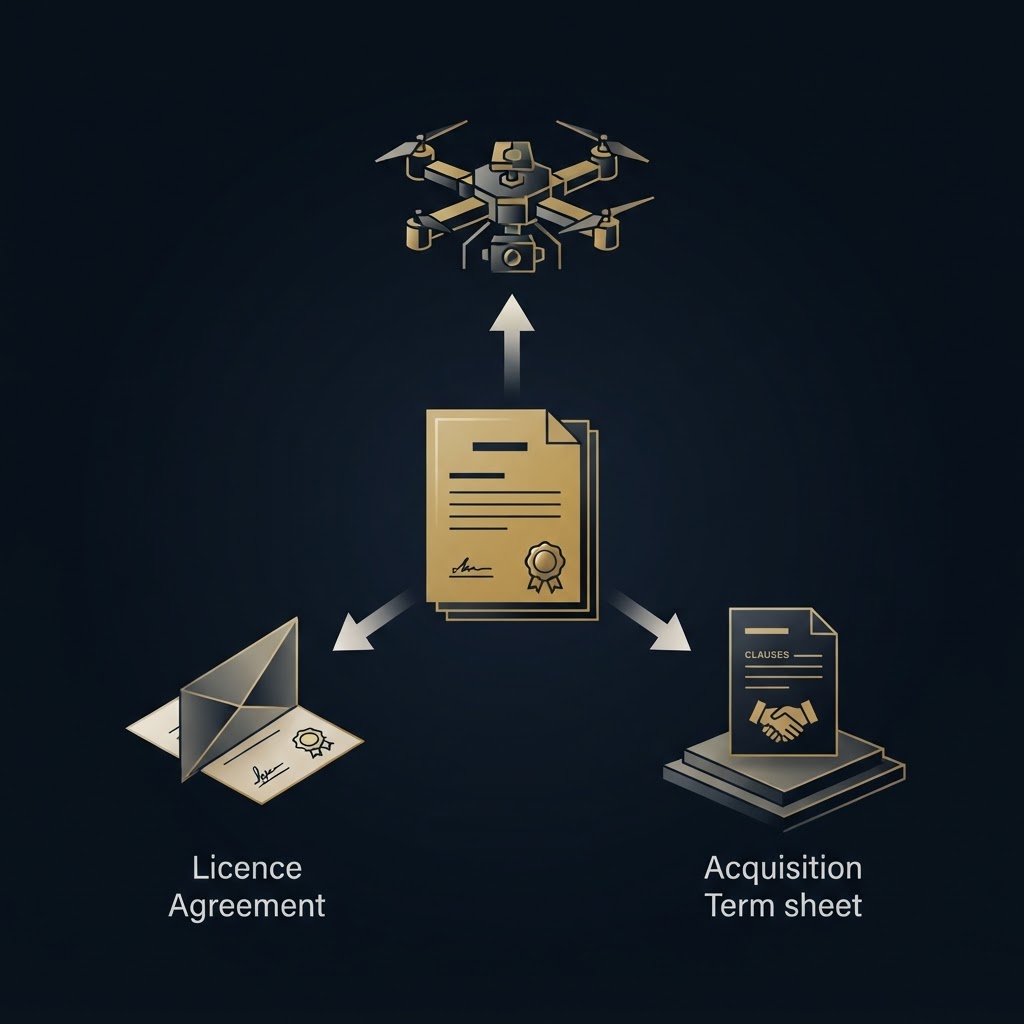
A startup built around a patent is a company whose reason to exist is a single claim. The founder, usually a scientist or engineer, finds a bottleneck in a technology everyone already uses, patents a specific fix, and builds the team, the funding and the go-to-market around that fix. The patent is the founding asset, not a defensive afterthought filed after launch. That is the opposite of the ordinary startup, which sells a product first and files on it later.
The pattern has a famous clean case. Fusion tokamaks had one long standing bottleneck: the magnet had to be enormous to confine plasma, which made the economics impossible. Commonwealth Fusion Systems spun out of MIT in 2018, spent three years on a high temperature superconducting magnet, hit a record 20 tesla field in 2021, and raised roughly 1.8 billion USD in Series B the same year because that patented magnet de-risked the whole thesis. Bottleneck, patent, company, capital, in that order.
We build companies this way for a living. EX EPIC finances, patents and deploys breakthrough science, with 24 patent families filed, roughly 100 more validated in the pipeline, and 200 plus energy units installed across 11 countries. Some of those families became companies. Some should only ever be licensed. A few were worth more with the inventor attached than as a company. This article is the decision logic behind those three outcomes.
The uncomfortable part first: a patent is not a business
The pages that celebrate the patent-first startup rarely quote the people who finance patents. Those people are blunt. A patent is a derivative asset: it has value only when it protects a revenue stream, and before revenue exists there is nothing to license, nothing to collateralise, nothing to finance and nothing to enforce. Filing also makes a trade. You give up secrecy, which was certain, for a speculative future right, and you no longer control who knows how the system works.
It gets worse before it gets better. Roughly 90% of patents are drafted before the product reaches market, so the claims describe an abstract conception rather than the thing eventually sold. Maintenance fees come due at years 3, 7 and 11 whether or not anything has shipped. Only around 50 to 55% of applicants get a grant at all.
None of that is an argument against the patent-first startup. It is the argument for it. The company exists precisely to build the revenue the patent will then protect. The claim is the seed, not the harvest. A founder who reads the patent as the finished product has confused the two, and that confusion is where most patent-first companies die.
Three ways one claim becomes a company
The strength of a well drafted hardware or process patent is optionality. The same claim can become a product, a licensing business or an acquisition target, often all three at different stages. The mistake is choosing before the evidence is in. We cover the full test in license or build a startup around your patent; the short version of each path follows.
Build the product
This is the path the venture thesis assumes. It is capital efficient in one specific sense: the first milestone is proving and protecting one narrow claim, not scaling a product across a market, and that is a much smaller and more fundable thing to promise. It is also the only path that creates the revenue stream the patent needs in order to be worth anything. The cost is time. Every year of development between filing and first sale is a year of protected term spent pre-revenue.
License the claim
Licensing is the most broadly applicable route, and royalty rates run from roughly 0.5% for software to 10 to 12% for medical devices. The trap is timing. A patent that has just issued cannot be infringed yet, so there is no stick with which to extract a licence, and a licensing-only company holds no leverage until someone is already selling into the claim, which typically takes 10 to 15 years. A large acquirer can also simply slow the negotiation and wait for the term to run out. We will write up the patent licensing business model separately, because the companies that make it work, ARM, Dolby and Qualcomm, were never licensing-only at the start.
Sell the company, or the patent with the inventor attached
Acquisition is often the highest value outcome, but it rewards families, not single filings. One patent is a start; acquisition premiums accelerate at a family of roughly 7 to 12 patents around the same core. A single patent family with no customers and no revenue trades in a 100,000 to 200,000 USD range, perhaps 500,000 USD on a good day. That is not a windfall, but combined with a multi-year contract for the inventor it is a real outcome, and for a technology that needs an incumbent's distribution, regulatory support and factories, the acqui-hire is frequently the honest path.
The five costs the thesis does not mention
The strongest advocates of the patent-first model list five barriers in their own piece. They deserve numbers.
- Time and legal cost. Patent prosecution routinely takes 18 to 36 months, and a fast moving bottleneck can close in less. The filing sequence that survives this clock is in our patent strategy for deep tech startups.
- Technical depth as a gatekeeper. Telling a genuine bottleneck from a cosmetic one needs domain expertise, which is why this model favours scientist and engineer founders over generalist operators.
- Freedom to operate. Owning a patent on the fix does not clear someone else's patent on the adjacent part of the same system. Investors treat a missing freedom to operate assessment as a sign the company could be blocked from commercialising at all.
- Capital to reduce the idea to practice. A patent describes an invention; it does not build the prototype. Most investors will not engage until there is a working demonstration, which has to be funded from somewhere.
- Litigation exposure. A Markman hearing alone runs around 500,000 USD per side, and full litigation averages 3 to 5 million USD per side over two to three years. A claim is only as strong as the balance sheet willing to defend it.
What investors check before they fund a patent-first company
Founders overestimate how much a grant matters and underestimate how much ownership does. You do not need an issued patent to raise venture capital. What investors check is patent-pending status on the core technology, clean assignment so the company and not the founders owns the IP, and no landmines such as a public disclosure that started a clock or a co-founder who never signed. Around 56% of startups that eventually patent file their first application before seed or Series A, and a provisional drafted with an attorney costs roughly 3,000 to 5,000 USD.
The payoff for getting this right is measurable. The joint EPO and EUIPO study of European startups found those with patent filings were up to 10.2 times more likely to secure funding, with the effect strongest in deep tech, where investors need to be patient.
Seed, venture and buyer read the same patent differently
The IAM review of deep-tech portfolios describes three readings. At seed, investors look almost entirely at the team and the idea; a provisional or a simple record of invention is enough, and they would rather the cash went to engineers or a first pilot customer. When venture funds step in they want a one page story showing which claims link to which customer facing features, they dislike ballooning legal bills, and they worry most about freedom to operate. Later buyers check the chain of title and the prosecution history line by line, and any loose assignment is a red flag. Across all three, patents matter less for upside than for downside: a curated portfolio improves recovery if the company fails.
Coverage beats count
A patent that reads onto a key market is worth more than 20 filings in markets that do not matter to customers. Investors also check whether the term outlasts the development clock, because patents that expire before the product reaches market offer little value, and filing too early burns years of term before the first sale. We are drafting a companion on patent due diligence for investors that turns this into a checklist.
How a venture builder wraps a company around a claim
Here is the mechanism that reconciles the enthusiasts and the sceptics. A patent becomes a company when three things are wrapped around the claim: capital to reduce it to practice, operators who know the market, and a deployment path to the first paying customer. A lone inventor rarely has all three. A venture builder supplies them.
In our portfolio the sequence is fixed. First the bottleneck is confirmed with the people who suffer from it, usually an operator in an emerging market paying too much for energy or waste disposal. Then the family is filed, not a single patent, because the acquisition premium and the design-around resistance both live in the family. Then operators are recruited, and hardware is built and installed. Only after a unit has run in the field do we decide which of the three paths that family takes. The numbers behind this are public: a EUR 160M plus capital track record, 24 patent families filed and 200 plus units deployed. Our patent portfolio strategy explains how the families are structured.
Two principles from the venture side hold up in practice. Size the company to the claim rather than to a market you cannot yet compete for. And pick the bottleneck an incumbent is relieved to see someone else solve; the moment a fix threatens the incumbent's own revenue line, the friendly landlord starts fast-following or litigating.
The feeder for this model is the university. AUTM's 2025 survey counted 1,095 new startups formed from academic discoveries, up 15% from 951 in 2024, while new patent applications from those institutions fell sharply as budgets tightened. More companies from fewer filings means the claims that do get filed are being worked harder, which is exactly what a builder does. University venture studios are the formal version of that handoff.
When not to build a startup around a patent
The clearest failure is a capital mismatch. One financier walks through the math on a licensing-only company that raised at a 15 million USD post-money valuation. Early investors expect a 10x return, so the company needs a 150 million USD exit. Nobody pays that for a licence to a patent in a long-lead industry, because the technology is already disclosed and the acquirer can wait. The capital strategy was built for a rocket ship; the business model was a rowboat. The right play was to walk into the acquirer with the patent, the test data and the proof of concept and ask for a job alongside the sale.
The second failure is the quiet wind-down. A hardware startup files provisionals, lets them lapse while chasing speed to market, and never prosecutes in the markets that matter. When funding dries up, the IP that goes to auction is thin: incomplete filings, unclear ownership, no evidence of commercial use. It sells for a fraction of its potential and investors recover almost nothing.
The decision rule that follows from both: if the only realistic buyer is one incumbent, and your claim is complementary to its core business, sell or license with the inventor attached rather than raise venture rounds against it. Build the company when the claim opens a market the incumbent is not serving, when the first customer can be reached with the capital you can raise, and when the term will outlast the development clock.
The sequence, condensed: find the bottleneck, file the family, secure the capital, recruit the operators, deploy the first unit, and only then choose between product, licence and sale.
FAQ
Can you start a company with just a patent?
You can incorporate around one, but a patent alone has no revenue to protect, and before revenue exists it cannot be licensed, financed or enforced. The company only exists in a meaningful sense once capital, an operating team and a route to a first paying customer have been wrapped around the claim.
Do you need a granted patent to raise venture capital?
No. At seed, investors check for a filed application on the core technology, clean assignment of the IP to the company, and no disclosure landmines. Around 56% of startups that eventually patent file their first application before seed or Series A, so patent-pending status is the norm, not a granted patent.
How much is a single patent worth without a product or revenue?
A single patent family with no customers and no revenue typically trades in the 100,000 to 200,000 USD range, occasionally up to 500,000 USD. The price rises with evidence of use and with the size of the family around the core claim.
How many patents does a startup need before an acquirer pays a premium?
One patent is a starting point. Acquisition premiums accelerate once a family of roughly 7 to 12 patents surrounds the same core, because the acquirer is paying to keep competitors from using the claims offensively, not for the revenue.
How long before a patent produces licensing income?
A newly issued patent cannot be infringed yet, so there is no leverage to extract a licence. Realised value from infringement typically takes 10 to 15 years, which is why licensing-only companies are a poor fit for angel and venture capital timelines.