Almost every published patent portfolio strategy stops at the grant. File the provisional, convert it, add continuations, pick your jurisdictions, done. That is the cheap half. The expensive half runs for the next fifteen years, and it is where portfolios quietly turn from an asset into a standing charge nobody in the company is willing to question.
The framing that fixes this is financial. A portfolio balances three competing forces, quality, lifecycle cost and market coverage, and companies that treat patents as trophies rather than business assets discover that an unmanaged portfolio becomes dead weight. Counting filings is easy. Measuring what they are worth is the job.
We write this from the builder side rather than the advisory side. EX Venture finances, patents and deploys breakthrough science, and the portfolio currently runs 24 patent families filed with roughly 100 more validated in the pipeline, alongside 200 plus energy units deployed across 11 countries. Every number below either comes from published research or from that experience, and the two disagree less often than you would expect.
What a portfolio strategy actually decides
Four decisions, in order of how much money they move: which inventions get protected at all, how broadly each one is claimed, which jurisdictions carry which filing, and when each asset is abandoned, licensed or sold. The last one is missing from most guides and it is the one that determines the return.
A working strategy aligns IP spending with product roadmaps, market entry and deals rather than with patent counts, which sounds obvious until you look at how filing decisions are actually made. They are usually made by an engineer who has just finished something interesting, at a moment when nobody has modelled the annuity bill that decision commits the company to.
Start from the roadmap, not the invention list
The distinction between a portfolio and a pile of applications is intent. Filings chosen to work together, versus applications filed whenever an invention happened to come up.
Protect the core and the design-around
Broad coverage on the mechanism the product cannot exist without is worth more than narrow coverage on a dozen features. The reason is how the asset gets read: investors, acquirers and licensees do not count patents, they read them, and three strong well-scoped patents are usually worth more than ten narrow poorly coordinated ones. Sophisticated competitors will engineer around your independent claims, so a portfolio built to hold includes narrower backup claims written specifically to block the likely workarounds.
Think in families, not filings
A family sharing one priority date, with continuations kept alive, preserves the ability to add claims as the product evolves and as competitors show their hand. This matters more in deep tech than anywhere else, because the thing you ship at year eight is rarely the thing you filed on at year one. The filing mechanics behind this, including what to keep as a trade secret and how to sequence a first application, are covered in our patent strategy for deep tech startups playbook.
Sequence filings against deployment, not funding rounds
Here the standard advice breaks. Software portfolios are sequenced against rounds because the product ships inside the patent timeline. Deep-tech hardware does not. The term runs from the filing date while the first paying installation may be seven or eight years out, so the filing calendar has to track technical and commercial milestones instead: a stable core concept, a validated subassembly, a process that hits target yield, a first commercial installation, entry into a new manufacturing country.
Coverage follows the same logic. The default top five offices are a habit, not a strategy. What should set the map is where competitors manufacture, where enforcement actually functions, and where the equipment will physically sit, because installed hardware in a country with no local protection is a working reference model for anyone who can visit it. A portfolio spread across eleven deployment countries looks very different from one drawn on a map of addressable markets.
Budget the whole twenty years, not the filing
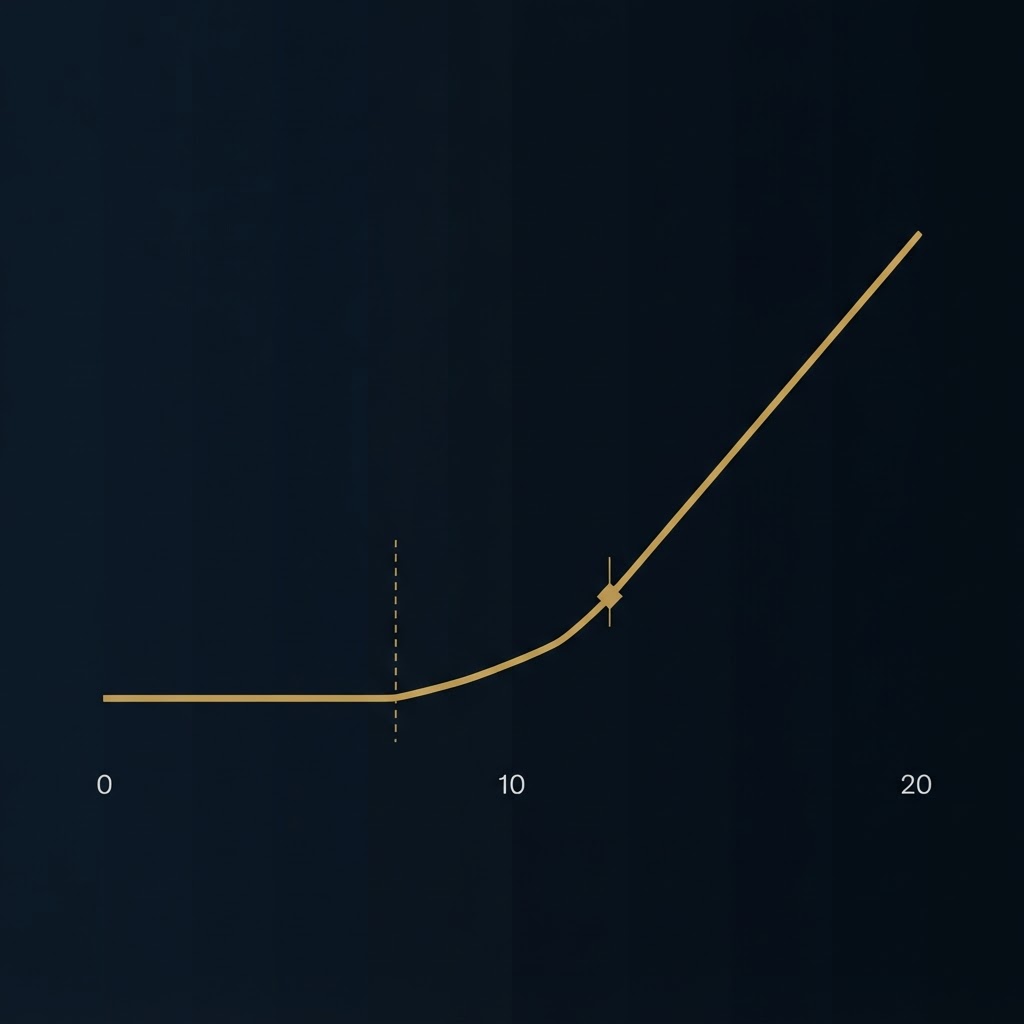
This is the section the filing guides skip, and the data is unambiguous. Renewal analysis covering tens of thousands of renewals across more than 230 jurisdictions found that renewal volume peaks at year 7, around 98% of patents remain active through year 6, the average patent lapses at 10.7 years, and around year 11 some 28.13% of jurisdictions raise renewal fees by more than 25% in a single year.
Read that as a cost curve rather than a set of facts. For the first six years a portfolio runs on autopilot because renewals are cheap and nobody has enough information to cut anything. Then the fees step up precisely when a deep-tech company is finally spending on manufacturing, certification and first installations. The bill and the revenue arrive in the same quarter. That collision is survivable only if the portfolio was sized for it at filing time, which means the annuity forecast belongs in the filing decision, not in a spreadsheet the finance team discovers at year nine.
The pruning decision is the strategy
The concentration of cost is what makes pruning a strategic act rather than housekeeping. Around 71% of total maintenance cost falls after year 10, rising to 88% in Germany, 80% in China and 83% in Korea, and a review of a mid-sized electronics portfolio found about 18% of patents with no remaining commercial or strategic value, whose removal cut annual maintenance spend by more than 2 million USD.
That is not an unusual result. An empirical analysis of renewal rates across nearly 100,000 patents found that 53.7% of patentees allow their patents to expire for failure to pay maintenance fees, and that the survivors are identifiable in advance: renewed patents had more claims, cited more prior art, received more citations and spent longer in prosecution. Prosecution quality predicts survival. Volume does not.
The blunter version circulates among IP executives, who commonly cite that less than 2% to 5% of a firm's patents are truly valuable to it, with one portfolio analysis putting 35% of the assets into likely-to-abandon categories even on conservative settings.
How to run the review
Five criteria, applied per asset, ideally at year 7 while the fees are still small enough that a wrong answer is cheap:
- Does it protect a product, process or licence that currently earns revenue?
- Does it block something a named competitor visibly wants to do?
- Is the jurisdiction one you still manufacture in, deploy in or could enforce in?
- Has anyone approached you about licensing it, and would anyone plausibly?
- Where is the underlying technology on its own lifecycle, ascending or superseded?
Two clean noes on the first three questions is usually enough to move an asset out of the core. What happens next is where most companies leave money on the table. Running this review well is most of what patent portfolio management means in practice.
Unused is not the same as worthless
The abandonment reflex assumes an unused patent is a failed one. The research says otherwise. A survey of US inventors found that 55% of triadic patents are commercialised, 17% are not commercialised but serve at least partly to preempt competitors, and only 3% are purely preemptive. A parallel inventor survey across Europe, the US and Japan found that a substantial share of patents is used neither internally nor for market transactions, which the authors read as inefficiency in the management of intellectual property rather than as evidence the inventions were bad.
Inefficiency is the operative word. A patent you will not commercialise yourself may still be squarely in someone else's product roadmap, and the decision at the annuity window is a three way one, not a two way one: renew, abandon or monetise. Monetising takes longer than paying an annuity, which is why it has to start before the deadline rather than at it. Two questions decide whether it is worth attempting: is there an identifiable operating company practising in this space, and does the claim set read on what they ship? If both answers are yes, the asset has a buyer or a licensee, and the average royalty rate for licensing intellectual property in your sector is the number that tells you whether the effort clears the annuity you were about to stop paying. Building that path in deliberately is what separates a defensive portfolio from a patent licensing strategy.
How investors read the portfolio
The funding signal is measurable and larger than most founders assume. A joint EPO and EUIPO study found European startups filing for patents and trade marks at seed or early growth stage were up to 10.2 times more likely to secure funding, and that filing was linked to more than twice the likelihood of a successful investor exit, with deep tech singled out because long lead times and heavy upfront investment make patents the instrument that attracts patient capital.
What a diligence team actually opens is narrower than the study implies. Three things: whether the claims read on the product being sold, whether the assignment chain is clean for every contributor including academic ones, and what the prosecution history looks like when the examiner pushed back. A portfolio that answers those three well is the reason patents function as IP as an asset class rather than as legal overhead on a balance sheet.
The annual review, condensed
- Map every filing to a product, process or licence. Anything mapping to nothing is a candidate, whatever it cost.
- Set filing triggers on technical milestones, not on rounds.
- Draw coverage from manufacturing sites, deployment sites and enforceability, in that order.
- Forecast annuities past year 10 before the first filing, not after the tenth.
- Run the full portfolio review at year 7, while cutting is still cheap.
- Run the monetisation question before every abandonment decision.
- Keep at least one application pending in each core family for as long as the roadmap is moving.
- Re-check the assignment chain annually. It is the only defect with no fast remedy.
FAQ
How many patents should a startup have in its portfolio? There is no target number, and treating one as a goal is how portfolios get expensive. Investors and acquirers read patents rather than count them, so a few well-scoped filings on the core mechanism outperform a larger set of narrow ones. The practical ceiling is the annuity budget you can still carry at year 10, when the cost curve steepens.
When should you stop paying renewal fees on a patent? When it protects nothing that earns, blocks nothing a competitor wants, sits in a jurisdiction you have left, and has attracted no licensing interest. The decision window in practice is years 8 to 11, and the average patent never reaches half its possible term.
What percentage of patents are actually used? Survey work on triadic patents puts commercialisation at 55%, with a further 17% uncommercialised but serving a preemptive purpose. The remainder is largely unused in any sense, which is the argument for reviewing assets rather than renewing them by default.
How much does it cost to maintain a patent portfolio? The shape of the cost matters more than the total. Roughly seven tenths of lifetime maintenance spend falls after year 10, and in Germany closer to nine tenths, so a portfolio that looks affordable in its first five years can double in cost without a single new filing.
Does a patent portfolio help raise funding? Substantially, on the European evidence, and most strongly in deep tech where the development cycle is long enough that a working product cannot be the proof point at seed stage. The effect comes from filings that are early and real, not from a count in a deck.